

Grind Coffee Beans for Freshness: A Step-by-Step Guide
Last Updated: October 23, 2026
Quick Summary
Grind coffee beans freshness begins to decline the moment you grind them: whole beans stay fresh for weeks, but ground coffee loses its best qualities within minutes. The best way to grind coffee beans for freshness is to grind only what you need right before you brew.
- Whole beans preserve flavor for 2-4 weeks after roasting; ground coffee stays acceptable for only 1-2 weeks
- Grinding exposes beans to air and triggers oxidation that breaks down aromatic compounds immediately
- Use a burr grinder set to the correct size for your brewing method: coarse for French press, medium for drip, fine for espresso
- Grind immediately before brewing, taking 30-90 seconds, rather than grinding in advance
- Store whole beans in a cool, dark, airtight container away from light, heat, and moisture
Table of Contents
- Why Grinding Fresh Coffee Beans Matters for Flavor
- Whole Beans vs. Pre-Ground Coffee: What Changes When You Grind
- Choosing the Best Coffee Grinder for Fresh Coffee
- Matching Coffee Grind Size for Brewing Methods
- How to Store Coffee Beans for Freshness
- How Long Does Ground Coffee Stay Fresh
- Grinding Only What You Need: The Right Workflow
- Common Mistakes When Grinding Coffee Beans
- Frequently Asked Questions
Why Grinding Fresh Coffee Beans Matters for Flavor
The moment you grind coffee beans freshness begins to decline: whole beans stay fresh for weeks, ground coffee for minutes.
When you grind coffee beans freshness depends on one fact: grinding exposes the bean's interior to air, triggering oxidation that breaks down aromatic compounds immediately. Explore why grinding fresh coffee beans matters for flavor in depth.
Starbucks explains that grinding releases aroma, which contributes to the entire coffee experience. The more surface area exposed to air, the faster flavors fade: vibrant when ground, flat an hour later.
The best way to grind coffee beans for freshness isn't complicated: grind only what you need, right before you brew.
Whole Beans vs. Pre-Ground Coffee: What Changes When You Grind
Whole beans keep oils and aromatic compounds locked inside until you break them open. Pre-ground coffee has already been exposed to air, light, and heat for days or weeks before it reaches your cup.
Whole beans deliver brightness, depth, and complexity; pre-ground tastes muted, with a bitter or thin finish.
Grinding creates heat and exposes far more surface area to oxygen, accelerating flavor breakdown.
If you've smelled a bag of pre-ground coffee, then brewed it, you noticed the smell was stronger than the taste: volatile aromatic compounds escaped while it sat in the bag.
| Comparison | Whole Beans | Pre-Ground Coffee |
|---|---|---|
| Freshness window | 2-4 weeks after roasting | 1-2 weeks after roasting |
| Flavor complexity | Full and vibrant | Muted and flat |
| Aroma strength | Preserved until brewing | Partially lost before brewing |
| Oxidation level | Minimal | Advanced |
| Best use | Grinding fresh before each brew | Convenience when freshness isn't priority |
Choosing the Best Coffee Grinder for Fresh Coffee
The grinder you choose determines whether you'll actually get fresh coffee.
A good grinder breaks beans into consistent pieces without excessive heat and lets you control particle size for your brewing method.
Cheap blade grinders create inconsistent particles and heat that damages flavor. Burr grinders are better, but quality varies.
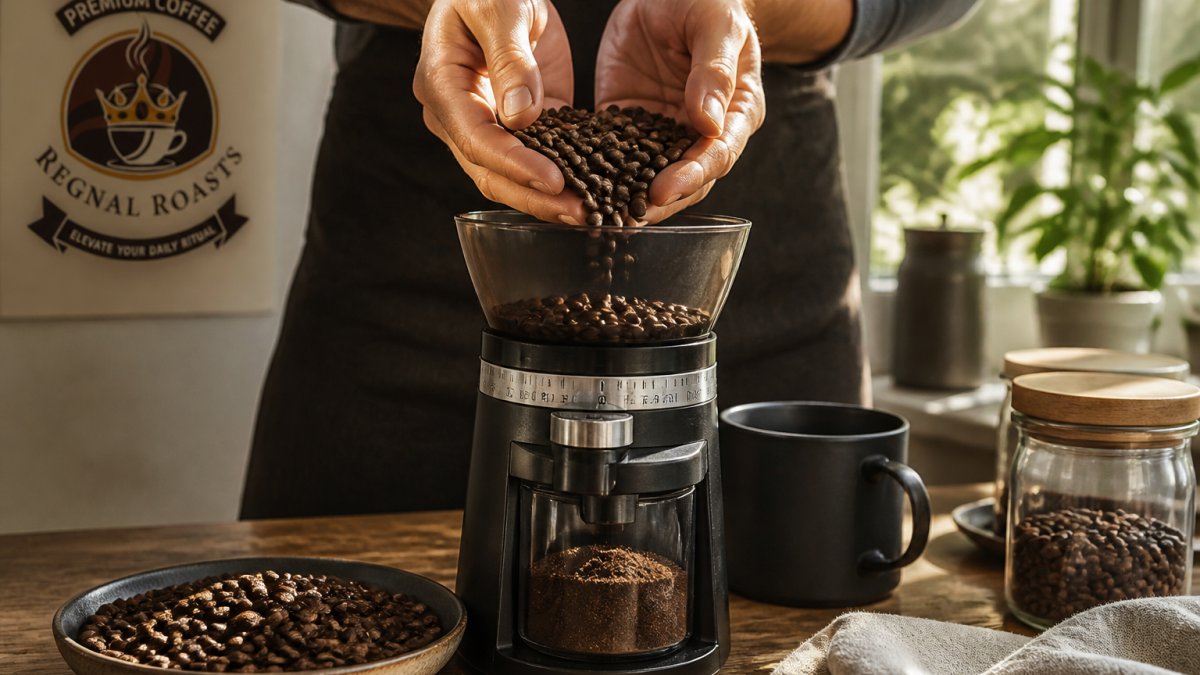
Burr Grinders vs. Blade Grinders
Blade grinders create uneven particles: powder over-extracts and tastes bitter while chunks under-extract and taste sour, leaving a muddy cup.
Burr grinders crush beans between two burrs, and the distance between them sets grind size for consistent particles.
Burr grinders cost more, but they're the only real choice if you care about flavor.
Flat burrs grind faster and create slightly more heat; conical burrs grind slower and stay cooler. For home use, both beat any blade grinder.
Manual vs. Electric Grinders
Manual grinders take 5-10 minutes of handle-turning per cup; electric grinders do the same in 30-60 seconds.
Electric grinders are faster, but manual grinders offer control: you set the speed, feel when the grind is done, and generate less heat.
For daily use, most people prefer electric; if you brew one or two cups and enjoy the ritual, manual works fine.
Stick with electric burr grinders: they're fast, consistent, and affordable, with good options starting around $40-80.
Matching Coffee Grind Size for Brewing Methods
Grind size is the foundation of extraction. Get it wrong, and even excellent beans taste bad.
Extraction pulls flavor compounds from grounds into hot water. Too fast (under-extraction) tastes sour and thin; too slow (over-extraction) tastes bitter and harsh.
Grind size controls extraction speed: finer grinds have more surface area and slow water flow; coarser grinds have less and speed it up.
Coarse Grind for French Press and Cold Brew
French press takes 4 minutes; cold brew takes 12-24 hours. Both use long contact time between water and grounds.
With long contact time, you need a coarse grind; a fine grind would extract too fast and taste bitter and harsh.
Coarse grinds look like breadcrumbs or sea salt: large, chunky particles that water moves through slowly, giving extraction the time it needs.
For French press, grind coarse and steep 4 minutes; for cold brew, grind coarse and steep overnight. The longer contact time delivers smooth, balanced coffee.
Cold brew is worth special attention. The extended steeping time with coarse grounds creates a concentrate that's naturally low-acid and smooth. Regnal Roasts offers a Cold Brew Coffee - Dark Roast ground specifically for this method. The coarse grind is optimized for slow extraction over 12-24 hours, producing a concentrate that's rich, clean, and deeply satisfying.

Medium Grind for Drip and Pour-Over
Drip and pour-over sit in the middle: brewing takes 3-5 minutes, so contact time is moderate.
Medium grinds look like sand, not as chunky as coarse, not as fine as espresso, letting water move through at a pace that extracts flavor without bitterness.
For drip machines, medium grind works best. For pour-over, you have more control: adjust pouring speed to fine-tune extraction, starting from medium.
Pour-over gives feedback: if water pours through too fast and tastes sour, grind finer or pour slower; if too slow and bitter, grind coarser or pour faster.
Most home brewers use drip or pour-over: a medium grind and a reliable electric burr grinder are all you need.
Fine Grind for Espresso
Espresso is different. Water passes through the grounds in 25-30 seconds under high pressure. You need a very fine grind.
Fine grinds look like powdered sugar or flour: small, tightly packed particles that slow water flow so pressure extracts flavor in seconds.
Espresso requires precision: grind size, dose, tamping pressure, and water temperature all matter. Get one wrong and the shot tastes sour or bitter.
New to espresso? Start medium-fine. If shots pull under 20 seconds, grind finer; over 35 seconds, grind coarser.
Espresso grinders are specialized tools that must produce very consistent fine particles. They cost more than general-purpose grinders but are worth it if you're serious.
How to Store Coffee Beans for Freshness
How you store beans after roasting determines how long they stay fresh.
Coffee stays freshest in whole bean form in a cool, dark, airtight container. Learn detailed guidance on how to store fresh coffee beans for maximum freshness. Avoid light, heat, air, and moisture, and beans stay flavorful for weeks.
One-way valve bags are ideal: they let carbon dioxide escape after roasting but keep air out. Many specialty roasters use them because they preserve freshness better than regular sealed bags.
Store beans in a cabinet away from sunlight at room temperature. Don't refrigerate: condensation forms as cold beans warm up, and moisture damages flavor.
:::pro-tip Buy beans in smaller quantities more often rather than large quantities infrequently. A 1-pound bag stays fresher than a 5-pound bag if you only brew occasionally. Fresher beans matter more than bulk savings.
How Long Does Ground Coffee Stay Fresh
Ground coffee starts losing flavor immediately, but how long does it stay good?
It depends on storage. In an airtight container at room temperature, ground coffee stays acceptable for 1-2 weeks before oxidation noticeably degrades flavor.
In the freezer, ground coffee lasts longer because cold slows oxidation, but condensation forms as it warms, damaging flavor. Better than the counter, not ideal.
Best practice: grind only what you need for one brew. If you must grind ahead, do it no more than a few hours before brewing.
Workflow matters: spending 90 seconds grinding before brewing beats grinding once a week and drinking pre-ground all week.
Grinding Only What You Need: The Right Workflow
The best way to grind coffee beans for freshness is a workflow, not a one-time decision.
Here's what works:
Before each brew, measure your beans. Use a scale or count scoops: 1-2 tablespoons per 6 ounces of water is a good starting point.
Grind immediately before brewing. Use your burr grinder set to the size for your brewing method. This takes 30-90 seconds depending on your grinder.
Brew right away. Don't let ground coffee sit. Use it while it's fresh.
Repeat for the next cup. This rhythm becomes automatic. After a week, it feels as natural as any other part of your morning routine.
The time investment is minimal. The flavor difference is enormous. A 90-second grind step transforms an average cup into something worth savoring.
If you're using a brewing method that requires pre-ground coffee (like some single-serve machines), buy the smallest quantity available and replace it frequently. Freshness matters more than convenience in this case.
Common Mistakes When Grinding Coffee Beans
Most people make the same errors. Knowing what to avoid saves you from flat, bitter, or sour coffee.
Grinding too far in advance. This is the biggest mistake.
Using the wrong grind size for your brewer. If your drip coffee tastes sour, you probably ground too coarse.
Grinding inconsistently. If you use a blade grinder or a burr grinder with poor build quality, your particle sizes vary wildly. This makes extraction uneven.
Storing ground coffee in the original bag. Those bags aren't airtight. Transfer ground coffee to an airtight container if you must store it.
Ignoring grinder maintenance. Burr grinders accumulate old coffee residue. This can affect flavor and grind consistency.
Grinding too much at once. Even if your grinder stays cool, grinding large quantities takes longer.
The common thread in these mistakes is impatience.
Grinding fresh coffee beans isn't complicated, but it does require intention.
Regnal Roasts offers a range of whole bean coffees in multiple grind options, including whole bean varieties that let you grind exactly what you need. Our 6 Bean Blend and single-origin options like Bali Blue and Ethiopia Natural are available in whole bean form.


Frequently Asked Questions
Should you grind coffee beans right before brewing?
Yes. Grinding immediately before brewing preserves the most aroma and flavor compounds. Once ground, coffee begins losing its aromatic oils within minutes. Whole beans stay fresh for weeks when stored properly, but ground coffee degrades rapidly when exposed to air. For the best cup, measure your dose, grind it, and brew within seconds. This is the single most impactful step in preserving freshness.
What is the best coffee grinder for fresh coffee?
A burr grinder (electric or manual) produces consistent, uniform particle size, which directly improves extraction and flavor. Blade grinders create uneven grounds that lead to over-extraction and bitter taste. For home use, electric burr grinders offer speed and convenience, while manual burr grinders give you control and work well for smaller quantities. Choose based on your brewing method and daily volume.
How long does ground coffee stay fresh after grinding?
Ground coffee is best used within 15 minutes of grinding. After 30 minutes, noticeable flavor loss occurs. Within hours, ground coffee becomes noticeably stale. If you must grind ahead, store it in an airtight container away from light and heat, but expect diminished flavor within 24 hours. Whole beans stored properly last 2-4 weeks, making them far superior for preserving freshness.
What grind size should I use for my brewing method?
Match grind size to steep time: coarse for slow methods (French press, cold brew, 12-24 hours), medium for moderate methods (drip, pour-over, 3-4 minutes), and fine for fast methods (espresso, 25-30 seconds). Incorrect grind size causes under-extraction (weak, sour coffee) or over-extraction (bitter, harsh). Start with your brewer's recommended size and adjust slightly based on taste.
