

Gourmet Coffee Alternatives to Angelino's
Table of Contents
- Why Gourmet Coffee Enthusiasts Seek Alternatives
- Fresh Roasted Coffee Beans: What Sets Them Apart
- Comparison Table: Single-Origin Options and Pricing
- Best Coffee for Espresso Machines and Milk-Based Drinks
- Gourmet Coffee for Home Brewing: Flavor Profiles and Roast Levels
- Angelino's Coffee Reviews: What Gourmet Drinkers Are Saying
- Cost-Per-Cup Analysis and Sustainability Considerations
- Conclusion
- Frequently Asked Questions
Last Updated: October 12, 2026
Why Gourmet Coffee Enthusiasts Seek Alternatives
If you've been using mass-produced coffee pods, the shift toward gourmet coffee alternatives feels like upgrading your morning ritual. Fresh-roasted, single-origin beans deliver complexity commercial blends cannot match. At Regnal Roasts, we roast for people who refuse to compromise on flavor, even when convenience matters.
The core issue with conventional pods is consistency without character: they're engineered for shelf stability, not sensory experience.
This guide covers what separates exceptional coffee from the ordinary: fresh-roasted options, single-origin selections, and how to evaluate one alternative against another.
Fresh Roasted Coffee Beans: What Sets Them Apart
Fresh-roasted coffee beans are the foundation of quality. The moment beans leave the roaster, they begin oxidizing.
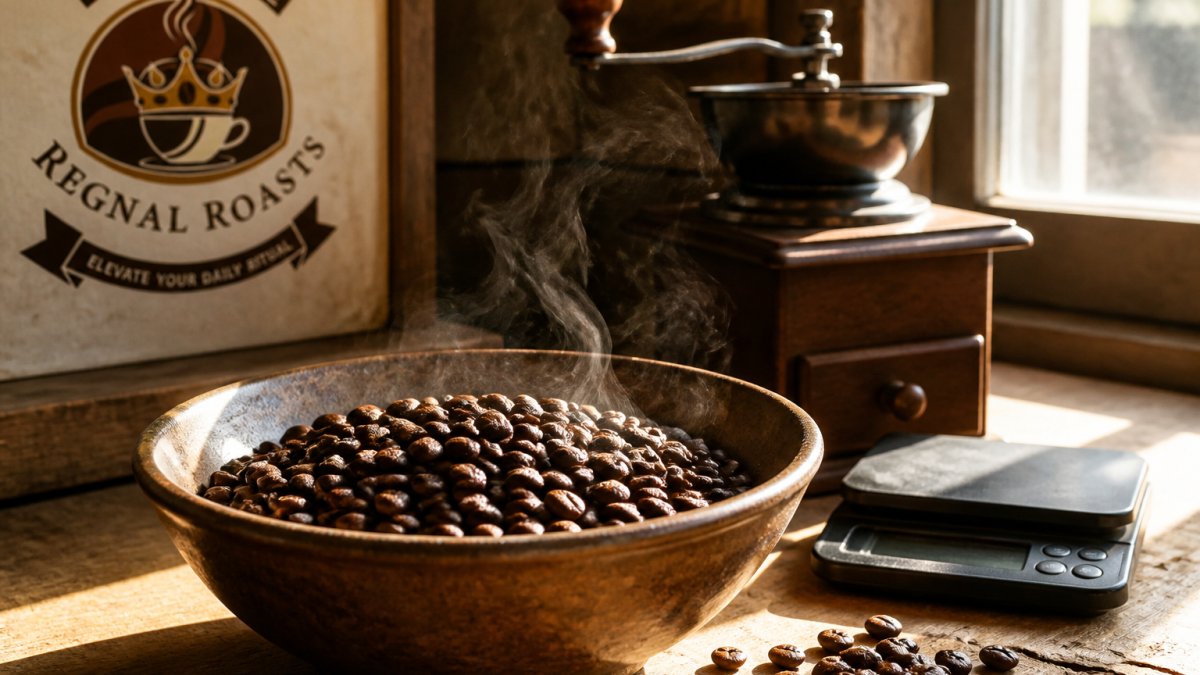
The roasting process defines the final cup. Light roasts preserve origin characteristics and acidity, medium roasts balance origin flavor with roast development, and dark roasts emphasize body and boldness. Too light tastes thin; too dark turns bitter.
Small-batch roasting lets roasters control variables large-scale operations cannot. Temperature curves, cooling times, and batch sizes all influence the final product, and a roaster working with fifty-pound batches can adjust in ways someone roasting five hundred pounds cannot.
Regnal Roasts roasts in small batches. Each roast profile highlights its origin's terroir, so the coffee tastes like somewhere, not everywhere.
Comparison Table: Single-Origin Options and Pricing
When choosing gourmet coffee alternatives, single-origin selections offer the clearest path to understanding what you prefer. Each origin brings distinct flavors shaped by altitude, soil, and processing method.
| Coffee | Roast Level | Tasting Notes | Best For | Price |
|---|---|---|---|---|
| Bali Blue | Medium-Dark | Dark chocolate, molasses, brown sugar | Milk-based drinks, bold black coffee | $158.02 |
| Ethiopia Natural | Medium-Light | Milk chocolate, fruity, caramel | Espresso, light sipping | $158.02 |
| Colombia | Medium | Dried orange, berry, chocolate | Balanced brewing methods | $158.02 |
| Guatemala | Medium | Dark chocolate, bright fruit, butterscotch | Espresso machines, pour-over | $158.02 |
| Kenya | Medium | Bright acidity, orange, lemon, floral | Filter coffee, light roast enthusiasts | $17.65 |
Single-origin coffees let you taste the difference geography makes. A coffee from Bali tastes fundamentally different from one grown in Ethiopia, even at the same roast level, volcanic versus Nitisol soil, wet-hulled versus natural sun-dried processing.

Pricing reflects origin and availability: some coffees command higher prices because the harvest is limited, while others represent exceptional value.
Best Coffee for Espresso Machines and Milk-Based Drinks
Espresso is a pressure extraction, not a steep. Nine bars of pressure push roughly 195-205°F water through a compacted puck in 25-30 seconds, so the bean's solubility, density, and roast development matter more than in any other brew method.
Milk adds a second variable. Fat and lactose mute acidity and amplify bitterness, so a bright, complex espresso can flatten into milk, while a heavy coffee can round into something sweet.
Here is how the single-origin options in the table above behave in an espresso machine and in milk-based drinks:
| Coffee | Espresso Behavior | In Milk | Best Drink |
|---|---|---|---|
| Bali Blue | Low acidity, syrupy body, slow even extraction | Holds its dark chocolate and molasses notes | Latte, cappuccino, flat white |
| Ethiopia Natural | High solubility, can gush if ground too fine | Fruity notes can clash with milk fat | Straight espresso, cortado |
| Colombia | Balanced extraction, forgiving of grind error | Dried orange and chocolate survive milk | Americano, small latte |
| Guatemala | Bright fruit and butterscotch, needs a coarser grind | Complexity cuts through milk without sharpness | Cappuccino, macchiato |
| Kenya | Very bright, high acidity, easy to over-extract | Floral and citrus notes get buried | Straight espresso, black filter |
A few mechanisms worth knowing:

- Density drives extraction. High-grown beans like Kenya and Ethiopia are denser, so they resist water longer and reward a finer grind and slightly higher brew temperature. Lower-grown Bali Blue extracts faster and tolerates a coarser grind.
- Roast development controls solubility. A medium-dark roast like Bali Blue has already broken down more of the bean's cellular structure, so it gives up its sugars quickly and evenly. A medium-light roast like Ethiopia Natural is less soluble and can turn sour if the shot runs short.
- Rest matters for espresso. Beans roasted within the last 3-5 days often degas too aggressively and pull uneven shots. Most espresso-focused roasters recommend resting beans 5-14 days after the roast date before dialing in.
If you drink mostly milk-based drinks, start with Bali Blue or Guatemala. If you drink espresso straight or with a splash of milk, Ethiopia Natural and Kenya reward the extra attention. Colombia is the safest all-rounder if you switch between drinks.
Gourmet Coffee for Home Brewing: Flavor Profiles and Roast Levels
Home brewing spans pour-over, French press, and automatic drip machines. Each method extracts differently, and understanding those differences helps you choose the right bean.
Pour-over and filter methods work best with medium and light roasts because their slower, more controlled extraction highlights the subtle characteristics that make single-origin coffee interesting.
French press brewing creates a fuller body because immersion extracts more oils and solids, so medium to medium-dark roasts work well. Colombia's medium roast delivers the balanced extraction French press drinkers appreciate.

Automatic drip machines benefit from medium roasts: too light and the coffee tastes thin, too dark and bitterness develops.
None of this makes one roast objectively better, the right roast matches your brewing method and taste preference.
Regnal Roasts offers each single-origin in multiple grind sizes, espresso, coarse, standard, and whole bean, so you can match the coffee to your equipment and ensure optimal extraction.
Angelino's Coffee Reviews: What Gourmet Drinkers Are Saying
Angelino's built its reputation on convenience and broad appeal, and for many drinkers that is the point. The narrower question gourmet drinkers ask: how does a mass-market pod compare, cup for cup, against a fresh-roasted single origin, on sensory profile, cost, and sourcing?
Sensory comparison: pod vs. fresh-roasted single origin
| Dimension | Typical mass-market pod | Fresh-roasted single origin |
|---|---|---|
| Acidity | Low, muted, sometimes flat | Bright to moderate, varies by origin |
| Body | Thin to medium, uniform | Medium to full, varies by roast and origin |
| Roast profile | Medium-dark, engineered for consistency | Light to dark, chosen to flatter the origin |
| Aroma | Subdued, often dominated by roast | Distinct, origin-specific |
| Finish | Short, sometimes papery | Long, evolving as the cup cools |
| Origin expression | Blended to a house profile | Single origin, traceable to a region |
The pattern most gourmet drinkers describe is not that pods taste bad, it is that they taste the same. A pod engineered for shelf stability is roasted and blended so batch 1 and batch 100 taste identical, smoothing out the origin's distinctive characteristics. A fresh-roasted single origin does the opposite: it is roasted to make one specific lot taste like itself.
Cost per cup: the math gourmet drinkers rarely run
Pod pricing varies, but a common range is roughly $0.50 to $1.50 per pod, about $180 to $550 per year at one pod per day.
A 12-ounce bag of fresh-roasted single-origin coffee yields roughly 20-24 cups at a standard dose. At the price points shown above, that is meaningfully higher than a cheap pod but well below a specialty cafe drink, which commonly runs $5-$8 in most metro areas. The comparison that matters is bag vs. the cafe drink you would otherwise buy, plus the fact that you control the extraction.
Sourcing and sustainability
Single-serve pods are a packaging problem as much as a coffee problem. Each cup arrives wrapped in plastic and foil, and recycling is difficult in most municipal programs. Direct-to-consumer whole-bean coffee skips the pod entirely: beans ship in a bag, you grind what you need, and waste per cup drops sharply.
Sourcing transparency is the other half. Mass-market pods are typically blends assembled from multiple origins to hit a target flavor, making it hard to trace any lot back to a farm. Single-origin roasters publish the region, processing method, and often the farm or cooperative, so a gourmet drinker can connect a flavor note to a place.
What this means for your decision
If your priority is speed and you genuinely do not taste the difference, a pod system is rational. If your priority is flavor, the trade-off is clear: you give up some convenience and pay more per cup, and in return you get acidity, body, and aroma a shelf-stable pod cannot deliver. Most gourmet drinkers who switch report the first noticeable change is aroma, the smell of freshly ground coffee is the part pods cannot replicate.
Cost-Per-Cup Analysis and Sustainability Considerations
Understanding actual cost per cup helps you evaluate whether gourmet alternatives represent real value or simply cost more.
Regnal Roasts single-origin coffees start at $158.02 per package.
The comparison becomes clearer when you factor in consistency.
Sustainability matters increasingly to gourmet coffee drinkers. Single-serve pods create significant plastic waste. Each pod represents one cup of coffee wrapped in plastic.
Direct-to-consumer coffee from roasters like Regnal Roasts eliminates unnecessary packaging and distribution steps. You receive beans roasted specifically for your order, which means fresher coffee and less waste.
Many gourmet coffee drinkers seek alternatives to pods because of sustainability concerns, recognizing that convenience carries a cost beyond the price tag.
Conclusion
The shift toward gourmet coffee alternatives reflects a fundamental change in how coffee drinkers view their morning ritual. They no longer accept that convenience requires sacrificing quality, and they understand that roast date matters, origin shapes flavor, and small-batch roasting delivers results mass production cannot replicate.
Regnal Roasts delivers exactly what gourmet drinkers seek: fresh-roasted, handcrafted coffee blends with single-origin options that showcase distinct flavor profiles.
When you're ready to experience what truly exceptional coffee tastes like, explore our single-origin selections. Start with one that matches your brewing method and taste preference. Notice the brightness, complexity, and character that fresh-roasted coffee delivers.
Specialty Coffee Association standards for coffee quality
Environmental impact analysis of single-serve coffee pods
Coffee roasting science and flavor development research
Frequently Asked Questions
What makes gourmet coffee alternatives to Angelino's worth the investment?
Premium alternatives offer distinct advantages: single-origin sourcing from high-altitude farms, hand-picked and traditionally processed beans, and flavor complexity that mass-produced options cannot match. Fresh-roasted gourmet coffee delivers richer tasting notes, think dark chocolate, caramel, or bright citrus, rather than the flat, generic taste of commodity coffee. For home coffee enthusiasts who value their daily ritual, the difference is substantial enough to justify the cost.
How do fresh roasted coffee beans compare to pre-packaged alternatives in terms of flavor and freshness?
Fresh-roasted beans maintain peak flavor for 2-4 weeks after roasting, while mass-produced coffee loses aromatic compounds and develops staleness. Single-origin fresh-roasted options reveal terroir, the unique characteristics imparted by altitude, soil, and climate. For example, beans grown in volcanic loam at 1,200-1,600 meters develop distinct chocolate and molasses notes that simply cannot emerge from commodity blends roasted months prior.
Which gourmet coffee works best for espresso machines and milk-based drinks?
Medium and medium-dark roasts perform best in espresso machines because they balance body and sweetness when pulled under pressure. A medium-dark roast with notes of dark chocolate and molasses stands up beautifully to milk, cutting through without becoming bitter. Medium roasts from high-altitude regions, grown in volcanic soil at 1,300-1,500 meters, offer bright fruit notes alongside chocolate, creating complexity even when combined with steamed milk.
What should I look for when comparing gourmet coffee for home brewing?
Prioritize roast profile (medium, medium-light, or dark), origin region, and tasting notes that match your preferences. Single-origin coffees from celebrated regions like Ethiopia, Colombia, or Bali offer traceable sourcing and consistent flavor. Check the processing method, natural, washed, or honey-processed, as this dramatically affects the cup profile. Altitude and soil type matter too: higher elevations and volcanic loam produce more complex, vibrant flavors.