

Does Coffee Bean Origin Really Change Pod Flavor?
Last Updated: October 24, 2026
Quick Summary
Coffee bean origin pods develop distinct flavor profiles based on altitude, soil, climate, and processing methods specific to their growing region. Where beans are grown directly shapes their taste characteristics, though roasting and brewing methods can amplify or mask those origin-driven flavors.
- Peruvian coffee grown at 1,100-1,700 meters produces smooth, sweet beans with salted caramel and citrus notes.
- Mexican Chiapas coffee at 1,400-1,900 meters delivers balanced flavor with lemon, brown sugar, and medium acidity.
- Bali volcanic coffee develops rich chocolate and molasses notes with high body from volcanic loam soil and wet-hulled processing.
- Light and medium roasts preserve origin characteristics better than dark roasts, which emphasize roasting flavors over regional differences.
- Single-origin pods let you taste regional differences, while blends balance flavors across multiple origins for consistency.
Table of Contents
- How Coffee Bean Origin Shapes Pod Flavor
- Single-Origin Coffee Pods vs. Blended Varieties
- Coffee-Growing Regions and Their Flavor Signatures
- Arabica vs. Robusta in Coffee Pods
- How Processing and Roasting Influence Origin Characteristics
- Evaluating Origin Claims on Your Pod Packaging
- Choosing Your First Premium Origin Pod
- Frequently Asked Questions
How Coffee Bean Origin Shapes Pod Flavor
The coffee bean origin pods you brew this morning traveled thousands of miles to reach your kitchen, and that journey shaped everything about its taste. Where beans grow, the altitude, soil, climate, and processing methods, creates distinct flavor profiles that persist even in the convenience of a single-serve pod. Yet many coffee drinkers assume all pods taste the same, or that origin claims on packaging are marketing noise. They're not.
At Regnal Roasts, we've spent years sourcing beans from specific regions and studying how those origins translate into the cup. Understanding how coffee bean origin pods influence flavor helps you make intentional choices instead of defaulting to whatever's on the shelf. Learn how to identify and taste the flavor profiles created by different origins.
This guide walks you through the science and practice of origin-driven pod flavor, region by region, so you can identify what you actually taste and choose pods that match your preferences.
Single-Origin Coffee Pods vs. Blended Varieties
Single-origin coffee pods contain beans from one geographic region, while blended varieties mix beans from multiple origins. The difference shapes your entire flavor experience.
Single-origin pods let origin characteristics shine. A Peruvian pod delivers the specific sweetness and citrus notes that Peruvian growing conditions produce. You taste the terroir, the combination of soil, altitude, and climate that makes that region's coffee distinct. Blends, by contrast, balance flavors across origins.
Neither approach is inherently superior. Single-origin pods appeal to coffee enthusiasts who want to explore regional differences and develop their palate. Blends suit people who prefer consistency or want a specific roast profile that transcends geography.
Regnal Roasts offers both. Our single-origin K-Cup compatible pods let you taste how geography shapes flavor, while our blended Original Roast delivers a crafted balance designed for daily ritual. Many people rotate between them, single-origin on weekends for exploration, blends on weekdays for dependable richness.
Coffee-Growing Regions and Their Flavor Signatures
Coffee flavor begins in the soil. Different regions produce distinct flavor notes because of their unique combination of altitude, climate, rainfall, soil composition, and farming practices. These factors influence the chemical compounds that develop in green coffee beans, which then evolve during roasting and brewing.
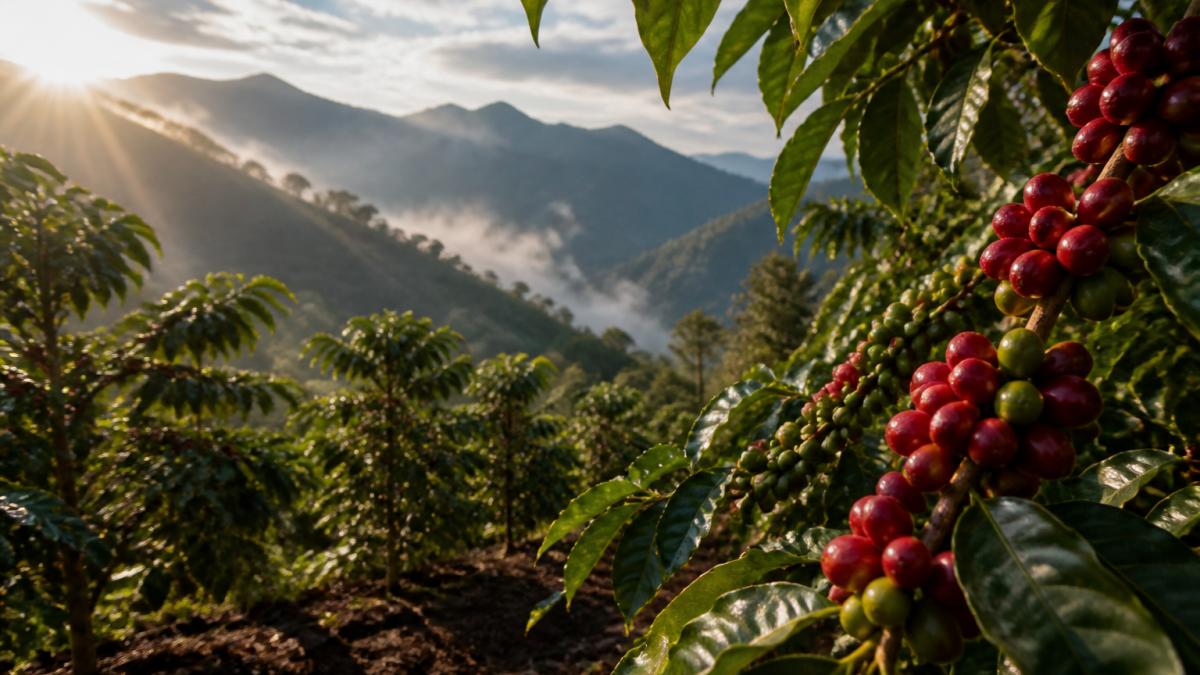
Altitude is one of the strongest determinants. Higher elevations mean slower bean maturation, which allows more complex sugars and acids to develop. Beans grown at 1,200 meters taste different from those at 1,800 meters, even within the same country. Soil composition, whether volcanic, clay-mineral, or alluvial, contributes mineral notes and influences how water moves through the root system.
Peruvian Highlands: Smooth and Sweet
Peruvian coffee grows in the Andes at elevations between 1,100 and 1,700 meters, where clay-mineral soils and consistent rainfall create ideal conditions for smooth, balanced beans. The region's altitude and cool mountain air slow bean maturation, allowing sugars to concentrate. The result is a coffee with natural sweetness and low acidity.
Peruvian beans typically display tasting notes of salted caramel, citrus, and subtle chocolate. The body is silky rather than heavy, making Peruvian coffee approachable for people who find high-acidity origins too sharp. When processed using the gully-washed and sun-dried method, common in Peru, the beans retain a clean, vibrant character.
In pod form, Peruvian coffee maintains these characteristics well. The single-serve brewing method extracts the bean's natural sweetness without over-emphasizing acidity. You can purchase Peruvian K-Cup compatible pods to experience this origin directly, or encounter Peruvian beans blended into multi-origin pods where they contribute smoothness and balance.

Mexican Chiapas: Balanced and Bright
Mexico's Chiapas region sits at 1,400 to 1,900 meters in the southern highlands, where washed processing and moderate altitude create coffee with character. Chiapas beans are known for balance: bright without being sharp, rich without being heavy.
Chiapas coffee appeals to people seeking middle ground. It's more vibrant than Peruvian but less intense than East African origins. The washed processing method, where beans are fermented in water and cleaned before drying, contributes to the clean, refined cup quality. This processing removes the fruit pulp quickly, preventing over-fermentation that can muddy flavors.
Mexican Chiapas pods brew a consistent, approachable cup that works equally well black or with milk. The medium acidity cuts through cream without disappearing, and the brown sugar sweetness pairs naturally with morning rituals. Explore Mexican K-Cup compatible pods to taste how this origin balances brightness and body.

Bali Volcanic Regions: Rich and Bold
Bali's Kintamani region produces coffee unlike anywhere else because of its volcanic terroir. Grown at 1,200 to 1,600 meters in volcanic loam soil, Bali coffee develops deep, earthy flavors with prominent chocolate and molasses notes. The volcanic minerals in the soil contribute mineral complexity, while the high altitude and consistent rainfall support dense bean development.
Bali coffee is traditionally processed using the wet-hulled method, where the parchment is removed while beans are still moist. This unconventional approach creates a distinctive profile: higher body, lower acidity, and pronounced earthiness compared to washed coffees.
In pods, Bali coffee delivers boldness. If you prefer black coffee, Bali's body and depth prevent the cup from tasting thin or over-extracted. Try Bali coffee K-Cup compatible pods if you want a coffee that feels substantial and unapologetic about its character.

Different coffee regions produce distinct flavor profiles based on their altitude, soil, climate, and processing methods.
| Region | Altitude (meters) | Key Flavor Notes | Body & Acidity |
|---|---|---|---|
| Peruvian Highlands | 1,100-1,700 | Salted caramel, citrus, chocolate | Silky, low acidity |
| Mexican Chiapas | 1,400-1,900 | Lemon, brown sugar, dark chocolate | Creamy, medium acidity |
| Bali Volcanic | 1,200-1,600 | Chocolate, molasses, earthy | High body, low acidity |
Arabica vs. Robusta in Coffee Pods
Two species dominate commercial coffee: Arabica and Robusta. Understanding the difference clarifies why origin claims matter differently depending on which species you're brewing.
Arabica accounts for roughly 60-70% of global coffee production and is considered higher quality. Arabica beans are grown at higher altitudes, have more complex flavor compounds, and taste smoother with more nuance. Most specialty coffee pods, including Regnal Roasts offerings, use Arabica.
Robusta is hardier, grows at lower altitudes, and produces higher yields. Robusta beans have more caffeine, higher acidity, and a more bitter, earthy flavor profile. Commercial instant coffee and budget pods often use Robusta because it's cheaper and more forgiving to grow.
When you see "single-origin" on a pod package, it's almost always Arabica. Robusta origins exist but rarely appear in premium pods because the species's strong flavor overpowers regional nuance. If you're choosing pods based on origin characteristics, Peruvian smoothness, Bali boldness, Mexican balance, you're shopping for Arabica.
How Processing and Roasting Influence Origin Characteristics
Origin creates the potential for flavor, but processing and roasting determine what actually reaches your cup. Two beans from the same farm can taste dramatically different depending on how they're processed and roasted.
Processing happens immediately after harvest. The two main methods are washed (wet) and natural (dry). Washed processing removes the fruit pulp quickly, creating cleaner, brighter flavors that let origin characteristics shine.
Roasting is where origin can get obscured. Light roasts preserve origin characteristics because the beans spend less time in the roaster, retaining more of their green-bean flavor compounds. Medium roasts balance origin expression with roasted flavors. Dark roasts emphasize roasting itself, the caramelized, smoky notes dominate, and origin becomes secondary.
This matters for pods because many commercial pods are dark roasted for boldness and consistency. A dark pod might claim a specific origin, but the roast profile has muted what makes that origin special.
Evaluating Origin Claims on Your Pod Packaging
Not all origin claims are equal. Some pods specify a single farm or cooperative; others just name a country. Learning to read pod labels helps you understand what you're actually buying.
The most specific claims name the farm, cooperative, or microregion, "Cooperativa Agrícola de Servicios Norandino, Piura Region, Peru" tells you exactly where the beans came from.
Regional claims, "Peruvian coffee" or "Mexican Chiapas", are broader but still meaningful. They indicate the beans come from a recognized coffee-growing area with known characteristics.
Country-level claims, "Brazilian coffee", are the least specific. Brazil produces enormous quantities of coffee with wide flavor variation depending on altitude, processing, and microregion.
Look for roast date on the package. Fresher is better.
Watch for vague marketing language that mimics origin claims without specifying origin. Phrases like "premium blend" or "gourmet roast" don't tell you where the beans actually came from.
Choosing Your First Premium Origin Pod
If you've been brewing standard pods and want to explore how origin shapes flavor, start with a single origin that matches your existing preferences, then branch out. Discover the benefits of single-serve pods before making your first premium origin purchase.
If you prefer smooth, less acidic coffee, begin with Peruvian K-Cup compatible pods. Peruvian coffee's natural sweetness and low acidity feel familiar to most people transitioning from commercial blends, making it an ideal entry point.
If you like balanced, versatile coffee that works black or with milk, Mexican Chiapas is the logical choice. You'll notice more brightness than Peruvian but without the intensity of African origins.
If you're drawn to bold, full-bodied coffee, Bali volcanic coffee delivers character immediately. The richness and chocolate notes are unmistakable.
Single-serve brewing isn't inherently inferior to other methods, it's a different tool with different trade-offs. Understanding those trade-offs helps you choose pods that align with your priorities.
Many people find that rotating between single-origin pods keeps their morning ritual from becoming routine. Brewing Peruvian one week, Mexican the next, and Bali the following week trains your palate to recognize how origin shapes flavor.
Coffee bean origin shapes pod flavor through altitude, soil, climate, and processing, but roasting and brewing method influence how prominently those characteristics appear in your cup. Start with a region that matches your taste preferences, then explore how different origins compare. Subscribe to our emails to discover new single-origin pods and learn how each region's story translates into flavor.
Frequently Asked Questions
Does coffee bean origin actually affect the taste of coffee pods?
Yes, coffee bean origin significantly influences pod flavor through altitude, soil composition, and climate. Beans grown in volcanic highlands develop different flavor compounds than those in other regions. However, the roast profile and processing method also shape the final taste, so origin is one of several factors. Single-origin pods let you experience these regional characteristics more clearly than blended varieties.
What's the difference between single-origin coffee pods and blended coffee pods?
Single-origin coffee pods contain beans from one specific region or farm, preserving distinct flavor notes tied to that geography. Blended pods mix beans from multiple origins to create a consistent, balanced flavor profile year-round. Single-origin pods let you taste how altitude, soil, and climate shape flavor; blends offer reliability and smoothness. Choose single-origin if you want to explore regional character, or blends if you prefer a familiar, dependable cup.
Which coffee-growing regions produce fruity or chocolatey flavors in pods?
Peruvian coffees from the Andes often deliver citrus and caramel notes due to their altitude and mineral-rich soil. Mexican Chiapas beans produce lemon and brown sugar profiles with medium acidity. Bali's volcanic regions yield dark chocolate and molasses notes from the rich loam soil and wet-hulled processing. Your pod's roast level also affects how prominently these notes emerge.
Why should I try single-origin pods instead of a standard coffee blend?
Single-origin pods let you taste how geography, altitude, and farming practices shape flavor in ways blends cannot. Each region produces distinct sensory qualities, from bright citrus to deep chocolate, that reflect its growing conditions and processing method. If you enjoy exploring flavor complexity and want to understand what makes premium coffee different, single-origin pods deliver that experience in the convenience of a pod. Regnal Roasts' single-origin options like Peruvian and Bali pods showcase how origin translates directly into your cup.
