

Benefits of Single Serve Coffee Pods: 2026 Guide
Table of Contents
- Why Single Serve Coffee Pods Fit the Modern Morning Routine
- Cost-Per-Cup Breakdown: What You Actually Spend
- How to Improve Single Serve Coffee Flavor at Home
- Eco-Friendly Coffee Pod Alternatives and Recycling Best Practices
- How to Choose Premium Coffee Pods That Match Your Palate
- Health and Material Safety: What's in Your Pod
- Customization Hacks for Better Single Serve Coffee
- Conclusion
- Frequently Asked Questions
Last Updated: September 15, 2026
Why Single Serve Coffee Pods Fit the Modern Morning Routine
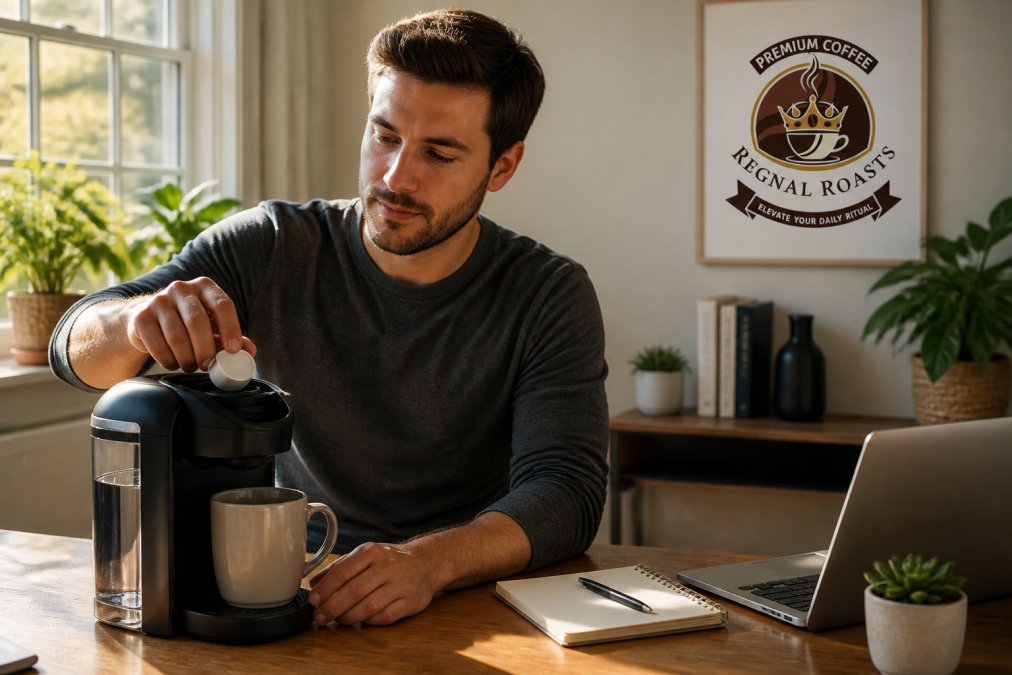
The benefits of single serve coffee pods come down to one trade-off: you give up some control over the brew in exchange for speed, consistency, and almost no cleanup. For remote workers and young professionals building a morning routine around a home office, that trade is usually worth it. A single-serve machine heats, brews, and finishes a cup in under two minutes, and every cup tastes the same as the last one. This guide from Regnal Roasts covers what that convenience costs, how to get better flavor out of the pods you own, and which pods are worth reordering.
Speed and Consistency in Under Two Minutes
The convenience factor is the whole pitch, and it holds up. A drip brewer takes five to ten minutes to finish a pot, most of which you spend waiting and then cleaning. A single-serve machine runs a fixed cycle: heat the water, push it through the pod at a set pressure, done.
That fixed cycle is also why brewing consistency is so reliable. Water temperature, extraction time, and dose are controlled by the machine rather than your pour, producing a repeatable cup with minimal effort.
Cost-Per-Cup Breakdown: What You Actually Spend
The cost-per-cup breakdown is where single-serve coffee stops looking cheap and starts looking like a choice. Bulk ground coffee usually lands well under a dollar per cup. Pods cost more per serving because you're paying for the packaging, the nitrogen flush, and the convenience built into each one.
The number that actually matters is your annual spend. Two cups a day is roughly 730 cups a year, and the gap between a budget pod and a premium one compounds fast at that volume. That's the real argument for buying pods you genuinely enjoy rather than the cheapest box on the shelf: you're not saving money by drinking coffee you don't like, you're just spending less to be disappointed.
| Buying Approach | Relative Cost Per Cup | Trade-Off |
|---|---|---|
| Bulk ground coffee | Lowest | Grinding, measuring, cleanup |
| Budget pods | Moderate | Convenience, plainer flavor |
| Premium pods | Highest | Convenience plus better flavor |
| Reusable pod + own grounds | Low | Filling, rinsing after every cup |
How to Improve Single Serve Coffee Flavor at Home
Learning how to improve single serve coffee flavor is mostly about two variables you control: water temperature and machine cleanliness. Get both right and even a mid-range pod tastes noticeably better.
Water Temperature and Extraction Time
Most single-serve machines brew in a narrow temperature band, and that band is the difference between a flat cup and a full one. If your machine has a temperature setting, brew lighter roasts hotter and darker roasts cooler. If it doesn't, run a plain water cycle first so the heating element is fully up to temperature before your pod goes in. A cold machine produces a weak, sour cup no matter how good the coffee inside the pod is.
Machine Maintenance and Descaling
Descaling is the step almost everyone skips, and it ruins flavor fastest. Mineral buildup in the heating element and needle changes water temperature and flow rate, throwing off extraction. Run a descaling cycle on the schedule your manual recommends, and rinse the pod holder daily. A clogged exit needle produces a slow, bitter brew that tastes like a bad pod when the pod was fine.
Eco-Friendly Coffee Pod Alternatives and Recycling Best Practices
Eco-friendly coffee pod alternatives fall into three groups: reusable filters you fill yourself, biodegradable or compostable pods, and standard plastic or aluminum pods handled through a proper recycling stream. Each reduces waste differently, and none is perfect. What almost every guide skips is what actually determines your footprint: what you do with the pod after the brew cycle ends.
The Three Alternatives, Ranked by What They Actually Divert
Reusable filters cut single-use waste to nearly zero because the only thing you throw away is the spent grounds, which compost. The cost is the convenience that made you buy a machine: you measure, fill, tamp lightly, brew, then rinse before the next cup. Most are stainless steel or BPA-free plastic and fit the same holder as a standard pod.
Compostable and biodegradable pods break down only under the conditions their certification requires. A pod labeled "commercially compostable" needs the sustained heat and microbial activity of an industrial facility; in a home backyard bin it may sit largely intact for a long time. A pod labeled "home compostable" is the one you can actually bury. Check the certification language on the box, not the word "eco" on the front.
Standard plastic and aluminum pods are recyclable in principle and rarely recycled in practice, because the coffee, filter, foil lid, and shell must be separated first. That separation step is the whole game.
A Step-by-Step Pod Recycling Routine
The practical move for a standard pod takes about thirty seconds:
- Let the pod cool completely. A hot pod steams, and moisture in a recycling bin contaminates the stream.
- Peel back the foil lid. On most plastic pods the lid lifts cleanly once cool.
- Tip the spent grounds into your compost, garden bed, or trash. Coffee grounds are nitrogen-rich and most municipal composting programs accept them.
- Rinse the empty shell. Food residue is the most common reason a recycler rejects a small plastic item.
- Check your municipality's accepted-materials list before tossing the shell. Small rigid plastics are accepted in some curbside programs and rejected in others; rules vary by facility, not by state.
For aluminum pods, the same logic applies with one difference: aluminum has a higher recycling value and a more established stream than most pod plastics, so a rinsed aluminum capsule is more likely to actually get recycled. Some roasters run take-back or mail-in programs; if yours does, that stream is usually more reliable than curbside.
The Trade-Off Nobody Prices In
Waste reduction here is a habit, not a product.
How to Choose Premium Coffee Pods That Match Your Palate
Roast Level, Origin, and Freshness Signals
Health and Material Safety: What's in Your Pod
Plastic vs. Aluminum: What the Material Actually Does
How to Verify a Pod's Materials Before You Buy
Temperature Accuracy Is a Safety Variable Too
Customization Hacks for Better Single Serve Coffee
Conclusion
Frequently Asked Questions
Are single serve pods the same as K-cups?
Single serve pods is a broad category that includes K-Cups, which are specifically designed for Keurig machines. K-Cup compatible pods, like those from Regnal Roasts, work in Keurig brewers but may use different filter and sealing technology. The key difference is compatibility and construction, not the basic concept of a pre-portioned coffee capsule.
How do single serve pods impact coffee freshness?
Freshness depends on packaging. Nitrogen-sealed or hermetically sealed pods remove oxygen, which slows oxidation and preserves aroma. Regnal Roasts uses nitrogen-sealed capsules that lock in peak flavor from roast to brew. Once a pod is punctured, drink it within minutes for the best cup.
What are the healthiest coffee pods to use?
Look for pods with BPA-free materials and no artificial flavorings. Single-origin options like Regnal Roasts' Mexican or Peruvian pods offer transparent sourcing. Always check whether the pod's plastic shell is food-grade.
Do Keurig pods expose you to microplastics?
Research on microplastics from coffee pods is still developing. Most pods use food-grade plastic, and brewing at high temperatures can release trace particles in some studies. Choosing pods with paper filters or biodegradable materials, and avoiding reheating coffee in plastic, reduces potential exposure.
How much do single serve coffee pods cost per cup?
Regnal Roasts' 12-pack costs $17.65, which is about $1.47 per cup. The 60-pack at $55.77 brings that down to roughly $0.93 per cup. Compared to a $4 to $6 cafe latte, even the smaller pack saves money while delivering barista-quality flavor at home.
Can I recycle single serve coffee pods?
Recycling options vary by municipality. Some programs accept pods if you separate the grounds from the plastic shell. Regnal Roasts recommends checking local guidelines. For now, the most practical step is to empty grounds into compost and check whether your local facility accepts #5 or #7 plastics.
What are the pros and cons of single-serve coffee makers?
Pros include speed, consistency, minimal cleanup, and beverage variety like tea pods and hot chocolate. Cons include higher cost-per-cup than bulk beans, environmental footprint from single-use plastic, and limited control over water temperature. Many users offset cons by choosing premium pods with recyclable components and descaling their machine regularly.