

How to Find Coffee Flavor Profiles: A Tasting Guide
Table of Contents
- What Coffee Flavor Profiles Are and Why They Matter
- Understanding the Coffee Flavor Wheel and Flavor Glossary
- The Fundamentals of Coffee Cupping: Your Tasting Protocol
- Identifying Coffee Flavor Notes in Your Cup
- How to Describe Coffee Taste Without Treating Notes as Ingredients
- What Influences Coffee Flavor: Origin, Variety, Processing, and Roast
- Common Mistakes to Avoid When Tasting Coffee
- Calibrating Your Palate: Practice Exercises and Comparisons
- Frequently Asked Questions
Last Updated: October 19, 2026
What Coffee Flavor Profiles Are and Why They Matter
A coffee flavor profile is the complete sensory description of how a coffee tastes, smells, and feels, the tasting notes, aromas, body, and finish that make one coffee distinct.
Understanding coffee flavor profiles transforms how you choose coffee: instead of guessing, you read the tasting notes and know what to expect.
Flavor profiles tell a story about origin and processing: a fruity profile suggests high altitude and natural processing, while a chocolatey, nutty profile often signals a medium roast from lower elevations.
The real value comes when you can identify what you actually like. Many drinkers assume they prefer dark roasts without ever tasting a bright, fruity single origin, or think they dislike coffee after only burnt, over-extracted cups.

Understanding the Coffee Flavor Wheel and Flavor Glossary
The coffee flavor wheel is a circular chart that organizes coffee tastes from broad flavor families to specific notes.
Think of it as a map for your taste buds.
Both tools exist because professionals needed a shared language: without them, one person's "fruity" means bright citrus while another thinks dark berry.
When learning to find coffee flavor profiles, start with the flavor wheel: are you drawn to fruity notes or chocolate and caramel?
The most widely used version is the Specialty Coffee Association (SCA) flavor wheel, freely available online with detailed definitions for each category.
The Fundamentals of Coffee Cupping: Your Tasting Protocol
Coffee cupping is the standardized method professionals use to evaluate coffee, isolating its actual flavors from variables like brewing equipment, water quality, and personal habit.
Cupping engages your senses in order: smell the dry grounds, smell the brewed coffee, taste at different temperatures, and note how flavors evolve as the cup cools, revealing layers a casual sip would miss.
What You'll Need Before You Start
Cupping doesn't require expensive equipment. You need:
- Coffee (freshly roasted, ideally within 2-4 weeks of roasting)
- Hot water (200-205°F, or about 30 seconds off boiling)
- A small white bowl or cupping bowl (8-12 oz capacity)
- A spoon (a soup spoon works fine)
- A coffee flavor wheel or glossary
- Paper and pen to write down notes
- Optional: a coffee grinder if you're grinding whole beans
The white bowl matters: it reveals the coffee's color and clarity, which give clues about roast level and extraction.
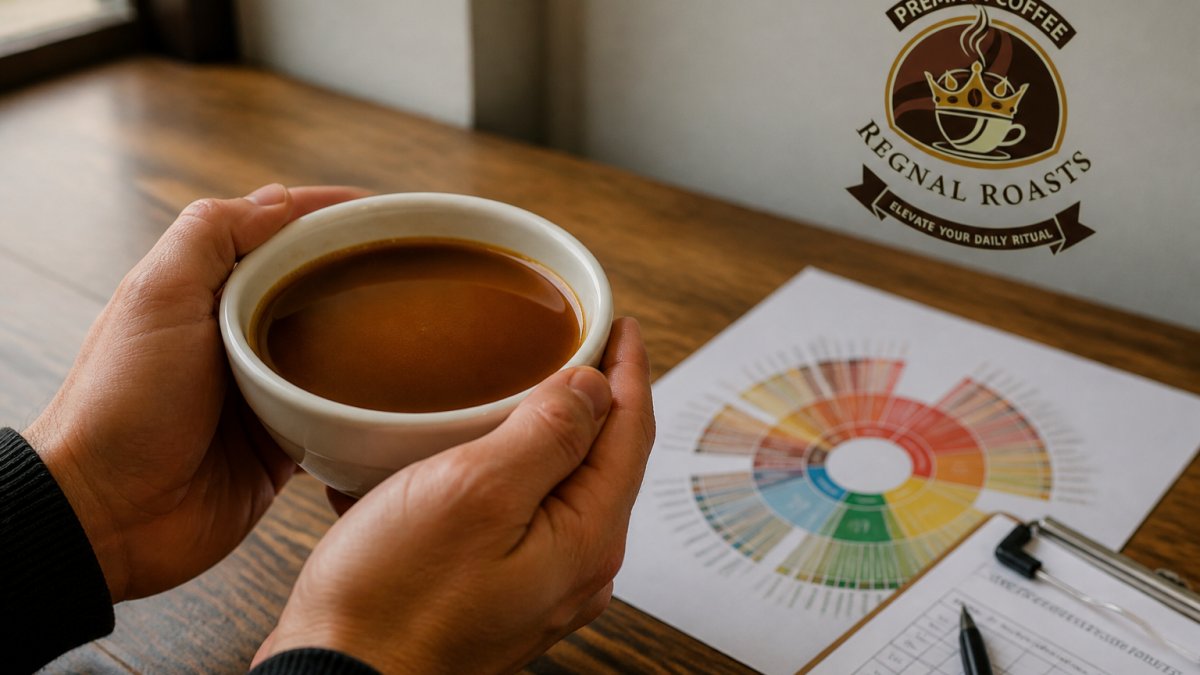
The Five Steps of Structured Coffee Tasting
Step 1: Smell the Dry Grounds (30 seconds)
Grind medium-fine, similar to drip, and smell the dry grounds directly.
Step 2: Pour Hot Water and Smell the Bloom (3-5 minutes)
Pour hot water over the grounds, saturating fully; a crust forms on top.
Step 3: Break the Crust and Smell Again (at 5 minutes)
Step 4: Taste at Different Temperatures (5-10 minutes onward)
Wait until the coffee cools to around 160°F.
Note the flavors: fruity, chocolatey, nutty, floral, or earthy?
Wait 2-3 minutes and taste again as the cup cools.
Step 5: Document Your Findings
Write down:
- Primary flavor categories (fruity, nutty, floral, etc.)
- Specific tasting notes (citrus, hazelnut, jasmine, etc.)
- Body (light, medium, full)
- Acidity level (bright, balanced, low)
- Finish (how long flavors linger and what they taste like)
- Overall impression
Over time, this record reveals patterns in what you like and why.
Identifying Coffee Flavor Notes in Your Cup
Flavor notes are the specific tastes you detect when cupping. They're not ingredients, the coffee contains no actual chocolate or blueberries, just compounds that trigger similar taste sensations.
"Blueberry" on a bag means a bright, slightly tart, fruity quality that reminds you of blueberries, not literal blueberry flavor.
Separating Aroma, Taste, and Mouthfeel
These three elements work together but are distinct sensations.
Aroma is what you smell, and it accounts for roughly 80% of what we perceive as taste, close your nose and take a sip, and flavor drops dramatically.
Taste is what your taste buds detect directly: sweet, sour, salty, bitter, and umami.
Mouthfeel is the texture and weight of the coffee: light and delicate like tea, or heavy and syrupy like whole milk?
Separating these three makes you a better taster: a coffee with fruity aroma but a slightly bitter taste may be over-extracted or roasted darker than the origin allows.
Primary Flavor Categories and What They Signal
Fruity notes suggest high altitude, natural or honey processing, and shorter fermentation.
Floral notes appear in high-acidity, natural-process coffees and are delicate and aromatic.
Nutty and Chocolate notes typically indicate medium roasts and washed processing, common in South American coffees (Brazil, Colombia).
Caramel and Sweet notes come from medium roasts and controlled fermentation, signaling good balance and careful processing.
Spicy and Earthy notes often indicate medium-dark or dark roasts, or lower-altitude coffees.
Acidic coffees taste bright and lively.
Bitter is a separate category. Some bitterness is normal and pleasant (a dark chocolate bitterness).
How to Describe Coffee Taste Without Treating Notes as Ingredients
The truth: tasting notes are flavor associations, not ingredient lists, descriptors that tell you what to expect.
Start by tasting intentionally: taste actual blueberries, then the coffee.
This works for all tasting notes: taste chocolate, then a coffee labeled with chocolate notes; taste citrus, then a fruity coffee.
When unsure about a tasting note, ask: What does that flavor actually taste like? What's its texture, bright or heavy, sweet or slightly sour?
Over time, you'll develop a personal tasting vocabulary. You might experience the same coffee differently than someone else describes it. That's normal and valuable.
What Influences Coffee Flavor: Origin, Variety, Processing, and Roast
Four factors shape every coffee's flavor profile. Understanding them helps you predict what a coffee will taste like before you taste it.
How Growing Region and Altitude Shape Flavor
Coffee grows in the "Bean Belt" between the Tropics of Cancer and Capricorn, where altitude matters enormously. High-altitude coffees (above 4,000 feet) develop complex, fruity, acidic flavors; lower-altitude coffees taste smoother, earthier, and less acidic.
Region also determines flavor: East African coffees (Ethiopia, Kenya, Tanzania) taste fruity and floral with bright acidity; Central American coffees (Colombia, Costa Rica, Honduras) show balanced, nutty, or chocolate profiles; South American coffees (Brazil, Peru) tend smooth, sweet, and earthy.
Soil, rainfall, and temperature influence what compounds develop in the bean. That's why the same variety tastes different grown in different places, terroir shapes the flavor.
Bean Variety and Processing Method as Flavor Drivers
Coffee varieties are like grape varieties in wine. Bourbon and Typica often produce balanced, sweet coffees; Geisha from Panama tastes floral and complex; Caturra produces bright, acidic coffees.
Processing matters equally. Washed (fermented in water, then dried) produces clean, bright, acidic coffees with pronounced origin flavors. Natural (whole cherries dried with the bean inside) creates fruity, sweet, sometimes floral profiles. Honey (some fruit left on during drying) balances both, producing sweet, complex coffees.
Variety and processing together determine much of what you'll taste: a natural-process Geisha tastes dramatically different from a washed-process Bourbon, even roasted the same way.
Roast Level and Brewing Variables as Flavor Confounders
Roast level is the wildcard. Light roasts preserve origin flavors, terroir, variety, and processing come through clearly. Dark roasts add roasted, caramelized flavors and mask origin. Medium roasts balance both.
Brewing variables can mask or amplify flavors independent of the coffee. Over-extraction (too long or water too hot) makes any coffee bitter and muddy; under-extraction (too brief or cool water) makes it sour and thin.
This is why cupping matters: a standardized method eliminates brewing as a variable so you taste the coffee's actual profile.
Common Mistakes to Avoid When Tasting Coffee
Mistake 1: Tasting on an empty stomach or right after eating. Your palate needs to be clean.
Mistake 3: Grinding too fine or too coarse. Medium-fine is the cupping standard.
Mistake 4: Comparing coffees without resetting your palate. The first coffee influences how you perceive the second.
Mistake 6: Tasting coffee that's too old. Coffee peaks 2-4 weeks after roasting; older coffee tastes flat and stale.
Mistake 7: Dismissing your own experience. If you taste something different from the tasting notes, you might be right. Your palate is valid.
Calibrating Your Palate: Practice Exercises and Comparisons
Your palate improves through deliberate practice. Here's how to build your tasting skills.
Exercise 1: Taste the Same Coffee at Different Temperatures
Brew one coffee and taste at 160°F, 140°F, 120°F, and 100°F, writing down what you taste at each.
Exercise 2: Compare Two Coffees Side by Side
Cup two coffees from different regions (say, an Ethiopian natural and a Colombian washed) in the same session.
Exercise 3: Taste Without Looking at Tasting Notes
Cup a coffee blind without reading the tasting notes first.
Exercise 4: Taste the Same Coffee Multiple Times
Buy a bag from Regnal Roasts and taste it several times over a week.
Exercise 5: Compare Roast Levels
If possible, taste the same coffee at light, medium, and dark roasts.
| Practice Method | Time Required | Frequency | What You Learn |
|---|---|---|---|
| Same coffee at different temperatures | 15 minutes | Weekly | How flavor evolves as coffee cools |
| Side-by-side comparison | 20 minutes | Twice monthly | What makes flavor profiles distinct |
| Blind tasting | 15 minutes | Monthly | How well your palate matches industry standards |
| Repeated tasting of one coffee | 10 minutes | Daily for a week | Subtle flavors you miss on first taste |
| Comparing roast levels | 20 minutes | Quarterly | Difference between origin and roasting flavors |
Start with one exercise per week and add more as you build confidence.
Learning to find coffee flavor profiles opens up a whole dimension of coffee appreciation. You'll choose coffee intentionally instead of randomly, understand why one bag costs more than another, and enjoy your cup more because you understand what you're tasting.
Finding coffee flavor profiles transforms how you experience your daily cup. When you're ready to explore beyond the basics, sample packs like the Single Origin Favorites Sample Pack let you compare six distinct flavor profiles side by side.
Frequently Asked Questions
How do I identify coffee flavor notes if I've never done this before?
Start by smelling the dry grounds and brewed coffee before tasting. Notice fruity, nutty, or chocolate aromas first, these are easier to detect than subtle flavors. Take small sips, hold the coffee in your mouth for a few seconds, and ask yourself: Is it sweet or bitter? Fruity or earthy? Use a coffee flavor wheel as a reference to name what you're experiencing. Compare two coffees side-by-side to make differences clearer. Most beginners pick up primary flavors like chocolate, caramel, or citrus within a few tastings.
What's the difference between a coffee flavor profile and flavored coffee?
A coffee flavor profile is the natural taste created by the bean's origin, variety, processing, and roast, what you taste when you brew it without any additions. Flavored coffee has natural or artificial flavoring oils applied to the beans after roasting, adding tastes like vanilla, hazelnut, or cinnamon on top of the base coffee. Understanding flavor profiles helps you choose coffees you'll enjoy naturally; flavored coffees offer a different experience for those who prefer added sweetness or flavor complexity.
How does the coffee flavor wheel help me describe what I'm tasting?
The coffee flavor wheel organizes tastes into categories, fruity, floral, nutty, sweet, spicy, earthy, with specific sub-flavors branching out from each. When you taste a coffee, start at the center with broad categories, then move outward to narrow down the exact flavor. For example, if you detect fruit, the wheel guides you to ask: Is it citrus, berry, or stone fruit? This structure prevents guessing and gives you a shared language to describe coffee with others. It's especially useful for beginners who feel unsure naming what they taste.
Why does my coffee taste different each time I brew it?
Brewing variables like water temperature, brew time, grind size, and coffee-to-water ratio all change the flavors you extract. Hotter water pulls out more bitter compounds; longer steep times extract more oils and body. Even small changes, like using slightly finer grounds or hotter water, can shift the flavor profile noticeably. If you want to taste a coffee's true character, keep your brewing method consistent so you're tasting the coffee itself, not the variables. Once you master one brew method, you can confidently compare different coffees.