

Tips for Choosing Quality Coffee Blends
Table of Contents
- Understanding What Makes a Quality Coffee Blend
- How to Choose Coffee Beans That Match Your Taste
- Best Coffee Blends for Beginners
- Coffee Blend vs Single Origin: Which Should You Choose
- Best Coffee for Espresso: Selecting Blends for Your Brewing Method
- Checking Freshness and Storage for Maximum Flavor
- A Practical Method for Tasting and Comparing Blends
- Frequently Asked Questions
Last Updated: October 15, 2026
Understanding What Makes a Quality Coffee Blend
A quality coffee blend combines beans from multiple origins, each selected for what it brings to the cup.
The best blends balance flavor complexity with consistency. Single-origin coffees can vary from harvest to harvest, but a well-crafted blend maintains the same character year after year.
At Regnal Roasts, we source beans from specific growing regions, evaluate how they interact, and roast them to bring out complementary flavors. Our 6 Bean Blend draws from six corners of the world, each origin contributing body, brightness, sweetness, or depth, unified into a bold, complex dark roast.

The Role of Origin and Growing Region
Where coffee grows shapes how it tastes. Beans from Central America differ from those grown in Africa or Asia, determined by altitude, climate, and soil.
High-altitude regions produce denser beans with more acidity and complexity; low-altitude regions tend toward heavier body and earthier notes. Volcanic soil adds mineral qualities, and tropical rainfall affects sweetness. Check the label for origin information to know what flavor profile to expect.
Our Latin American Blend sources coffees from shade-grown rainforests and volcanic soil near the Amazon. These growing conditions create nutty warmth and gentle fruity brightness.
How Processing Methods Shape Your Cup
Processing turns raw coffee fruit into the bean you brew, via two main methods: washed and natural.
Washed processing removes the fruit before drying the bean, producing cleaner, brighter flavors that highlight origin. It's more controlled, so you get consistency batch to batch, and most specialty coffees use it.
Natural processing dries the entire fruit around the bean, then removes it. This creates heavier body, more sweetness, and fruit-forward flavors. It's less predictable but can produce stunning complexity. Some blends use both methods to balance brightness and body.
If the label says "washed" or "wet-mill," expect clean, bright flavors; "natural" or "dry-processed" means heavier body and more fruit notes. Our Latin American Blend uses eco-friendly washed processing and full sun drying for up to seven days.
How to Choose Coffee Beans That Match Your Taste
Ask yourself one question: do you prefer bright, complex flavors or smooth, full-bodied coffee?
Bright coffees have higher acidity and taste fruity or floral, working well in drip and pour-over. Smooth coffees have lower acidity, heavier body, and nutty or chocolatey notes, ideal for espresso and French press.
Your preference determines which blends to try. If you like brightness, look for medium roasts with washed-processed beans from high-altitude origins. If you prefer smoothness, go for dark roasts with natural-processed beans or blends that balance multiple origins.
Evaluating Roast Level and Flavor Development
Roast level is the biggest factor in how your coffee tastes.
Light roasts preserve origin flavors best. Beans are removed from the roaster early, before roasting masks natural characteristics, so you taste more acidity, complexity, and origin character.
Medium roasts balance origin and roasting flavors, developing caramel sweetness and chocolate notes while still showing brightness, the sweet spot for many people.
Dark roasts emphasize roasting flavors over origin. Roasted longer, they develop bold, heavy chocolate and smoke notes while origin characteristics fade. They work beautifully in espresso and milk-based coffee because the boldness cuts through milk.
Our House Blend is a medium roast, it delivers smooth, clean body with toasted nuts, sweet chocolate, and a bright, clean finish. Our 6 Bean Blend is dark roast, bold and complex with layers from six origins. Choose based on your brewing method and taste preference.

Reading the Flavor Profile on the Label
Coffee labels should tell you what you're getting. Look for tasting notes.
"Nutty, chocolate, citrus" means those are the dominant flavors. "Fruity, floral, tea-like" indicates a lighter, more delicate cup, while "earthy, smoky, full-bodied" suggests a darker, heavier roast.
Pay attention to the roast date, not just the roast level. A bag roasted two weeks ago tastes brighter and more complex than one roasted three months ago, since flavor compounds break down over time.
Best Coffee Blends for Beginners
If you're new to quality coffee blends, start with a medium roast: forgiving, balanced, and interesting without being intimidating.
Our House Blend is designed for this, bringing together specialty coffees from Central and South America processed with both natural and washed methods. The result is smooth and clean with toasted nuts, sweet chocolate, and mild citrus, consistent in any brewing method and approachable for anyone discovering quality coffee.
Kopi Safari is another excellent starting point, a post-roast blend balancing lively character with grounding depth. It's brighter than the House Blend but not harsh, inviting you to slow down and savor your coffee ritual.
Avoid jumping straight to dark roasts or single-origin coffees. Dark roasts can taste bitter if you're not used to them, and single-origin coffees vary more and require more brewing attention. Build your palate first with a balanced, forgiving blend.
Coffee Blend vs Single Origin: Which Should You Choose
Both have real advantages.
When Blends Offer Consistency and Balance
Blends are engineered: a roaster selects specific origins, evaluates how they interact, and roasts them to a target flavor profile. The result is consistency, so the same blend tastes the same next month.
That consistency matters for a daily ritual: you want your morning cup to be reliable and comforting.
Blends also balance flavors in ways single-origin coffees can't. Combining a bright African coffee with a heavy South American one gives brightness and body in the same cup, a balance harder to achieve with a single origin.
Choose a blend for consistency, balance, and a coffee that works across brewing methods. Our blends are reliable and complex, whether you use a single-serve machine or a French press.
When Single-Origin Coffees Deliver Distinction
Single-origin coffees come from one specific place, showcasing what that region, altitude, climate, and processing method create. With no blending to balance flavors, you taste the origin purely.
Single-origin coffees are for exploring: tasting the difference between an Ethiopian and a Colombian coffee, understanding how altitude affects flavor, and discovering your favorite origin.
Single-origin coffees also vary more, since two bags from the same origin may come from different harvests. For enthusiasts, that variation is part of the appeal.
Choose single-origin if you're curious, want to develop your palate, or have a favorite region to explore deeply, but understand it requires more brewing attention and tolerance for variation.
Best Coffee for Espresso: Selecting Blends for Your Brewing Method
Espresso demands specific characteristics from your beans. Hot water forced through grounds under pressure needs a blend that can handle that intensity.
Look for espresso-specific blends, roasted darker to develop body and sweetness that cuts through milk. They're blended with enough complexity to avoid tasting one-dimensional, but enough boldness to taste the coffee even when diluted with water or milk.
Our 6 Bean Blend is perfect for espresso: a dark roast with layers of complexity from six origins, rich and full-bodied, with notes that hold up under pressure. It works beautifully as a straight shot or in a cappuccino or latte.
Kopi Safari works too if you prefer a lighter touch, bringing more brightness to espresso while maintaining the depth needed for a quality shot.
The key is matching roast level to brewing method: dark roasts for espresso, medium for drip, light for pour-over. Different methods extract different compounds, so choose a blend roasted for your method.
Checking Freshness and Storage for Maximum Flavor
Freshness is non-negotiable. A stale blend tastes flat, bitter, and one-dimensional. A fresh blend tastes bright, complex, and alive.
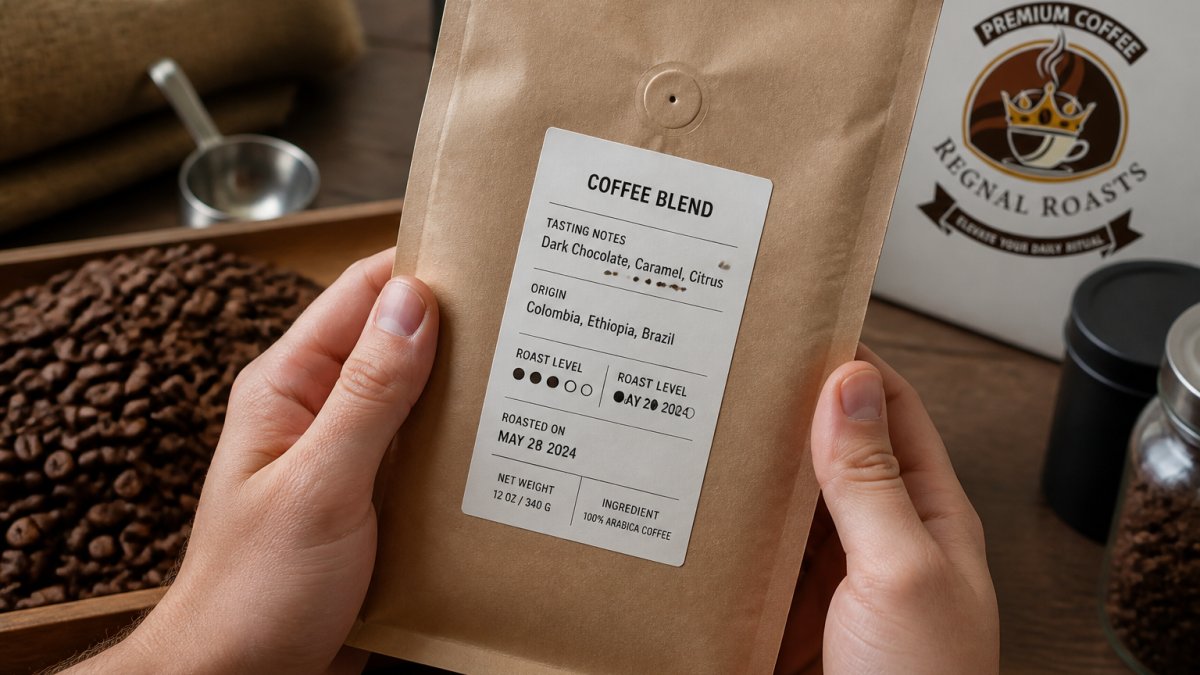
Reading the Roast Date and Packaging
The roast date is the most important number on the bag, not the best-by date.
Coffee is freshest for about two weeks after roasting. After that it's still good, but bright, complex flavors fade.
Look for bags roasted within the last two weeks.
Check the packaging too. Coffee should come in bags with a one-way valve, letting carbon dioxide escape without letting air in. Whole beans in opaque bags stay fresher longer than pre-ground coffee in clear bags.
Proper Storage to Preserve Complexity and Body
Once opened, keep the beans fresh.
Store whole beans in an airtight container at room temperature.
Grind just before brewing. Ground coffee stales much faster than whole beans because more surface area is exposed to air, so coffee ground the night before tastes noticeably flatter by morning.
Buy smaller bags more often rather than large bags infrequently.
A Practical Method for Tasting and Comparing Blends
Tasting coffee is a skill you can develop with a simple method.
Step 1: Smell the dry beans. Open a bag and inhale. Chocolate? Fruit? Nuts? Smell is the primary driver of taste, so this step matters.
Step 2: Brew a small amount black. Use your normal brewing method but make just enough for a few sips. Let it cool to drinking temperature.
Step 3: Taste and evaluate. Take a sip. Let it sit on your tongue for a moment. Notice:
- Body: Does it feel light and tea-like, medium and balanced, or heavy and syrupy?
- Acidity: Is there brightness, or does it taste flat?
- Flavor notes: What flavors come through? Do they match the label?
- Aftertaste: What lingers after you swallow? Pleasant or harsh?
Step 4: Compare side by side. Taste two blends in the same session: sip one, cleanse your palate with water, then taste the other. This is how you notice differences.
Keep notes on what you taste. Over time you'll develop a vocabulary and recognize what you actually prefer, buying blends because you know they taste good to you rather than because they're popular.
| Tasting Element | What to Notice | Examples |
|---|---|---|
| Body | Light, medium, or heavy feel on tongue | Light like tea, medium balanced, heavy syrupy |
| Acidity | Brightness or flatness | Bright citrus, flat earthiness |
| Flavor Notes | Primary tastes | Chocolate, nuts, fruit, caramel |
| Aftertaste | What lingers | Pleasant sweetness, harsh bitterness |
Choosing quality coffee blends comes down to understanding what you prefer and matching it to what the blend offers. Start with a balanced medium roast from a roaster who prints the roast date, taste it black, notice the flavors, then explore from there.
At Regnal Roasts, we've built our blends around this principle: each is roasted to bring out specific characteristics, labeled clearly, and roasted fresh so you taste the complexity. Our House Blend delivers consistency and balance, our 6 Bean Blend showcases bold, layered complexity, and our Latin American Blend brings warmth and depth.

Frequently Asked Questions
What makes a coffee blend high quality?
Quality coffee blends combine beans from multiple origins chosen for what each contributes, body, brightness, sweetness, or depth. Look for blends that specify their origins, roast date, and processing methods. The best blends balance complexity with consistency. Freshness matters too; a quality blend roasted within the past two weeks will deliver the full flavor profile the roaster intended.
How do I choose coffee beans that suit my brewing method?
Your brewing method determines the ideal grind size. Espresso requires a finer grind and beans with body and sweetness to cut through milk or stand alone; look for dark or medium-dark roasts. French press and drip coffee work well with medium roasts that highlight acidity and complexity. Cold brew benefits from darker roasts with lower acidity. Check the bag's label for brewing recommendations.
What is the difference between a coffee blend and single-origin coffee?
Single-origin coffees come from one region or farm, showcasing unique flavor notes tied to altitude, climate, and topography. Blends combine beans from multiple origins to create consistency and balance, each origin contributes specific qualities like body or brightness. Blends are ideal if you want reliable flavor every time; single-origins offer more subtlety and distinction for those exploring different growing regions and processing methods.
How can I tell if coffee beans are fresh?
Check the roast date on the package; beans are freshest within two weeks of roasting. The aroma should be vibrant and complex. Store beans in an airtight container away from light, heat, and moisture to preserve freshness.