

Small Batch Coffee Sampler: A 2026 Guide
Table of Contents
- What Is a Small Batch Coffee Sampler?
- Why Choose a Small Batch Coffee Sampler Pack
- Single Origin vs. Signature Blends: Which Sampler Suits You
- Coffee Tasting Notes Explained: Reading Flavor Profiles
- Best Way to Grind Coffee Beans for Freshness
- How to Store Coffee Beans to Maintain Flavor
- Brewing Methods and Freshness Guarantees
- Frequently Asked Questions
Last Updated: September 21, 2026
What Is a Small Batch Coffee Sampler?
A small batch coffee sampler is a curated collection of freshly roasted coffees in small quantities, designed to let you explore different flavor profiles, roast levels, and origins without committing to full-size bags. Each sample typically contains 2 ounces of coffee, enough for multiple brewing sessions. This format solves a real problem: buying full bags of unfamiliar coffees means risking money on blends that might not suit your palate.
Small batch roasting is what makes these samplers special. When coffees are roasted in smaller quantities rather than mass-produced batches, the roaster can control temperature and timing more precisely, preserving the unique characteristics of each bean. The result is coffee with more distinct tasting notes and greater complexity than you'll find in commodity-grade options.
Regnal Roasts specializes in handcrafted small batch coffee samplers that give you direct access to single origin coffees and signature blends in manageable portions. This approach eliminates the guesswork, you get to taste what you're buying before investing in larger quantities.

The small batch coffee sampler format also works perfectly for gifting or for establishing a home tasting ritual. Whether you're a morning routine enthusiast or someone building a coffee collection, samplers let you build your preferences methodically rather than randomly.
Why Choose a Small Batch Coffee Sampler Pack
The core advantage of a small batch coffee sampler pack is discovery without waste. You're not stuck with five pounds of a coffee that doesn't work for your taste. Instead, you get to evaluate multiple options and identify what actually resonates with your palate.
Freshness matters more with specialty coffee than with mass-market brands. Small batch roasters typically roast to order or in small quantities, meaning the coffee reaches you closer to its roast date. Coffee begins to lose its optimal flavor within two to three weeks of roasting, so fresher beans deliver noticeably brighter, more complex cups. When you order a small batch coffee sampler, you're getting coffee at peak freshness rather than inventory that's been sitting in a warehouse for months.
Cost efficiency is another real benefit. A small batch coffee sampler pack lets you sample premium, specialty-grade coffees at a lower per-unit cost than buying individual full bags. You're paying for variety and discovery rather than committing capital to larger quantities upfront. For someone new to specialty coffee, this is the practical entry point.
The educational value shouldn't be overlooked either. Tasting multiple coffees side by side teaches you what you actually prefer. You'll discover whether you gravitate toward bright, acidic East African coffees or toward smooth, chocolate-forward South American blends. This self-knowledge saves money long-term because you stop buying coffees that don't align with your taste.
Single Origin vs. Signature Blends: Which Sampler Suits You
Single origin coffees come from one specific country, region, or even one farm. They showcase the unique characteristics of that terroir, the altitude, soil, climate, and processing method all shape the final cup. A single origin coffee from Ethiopia will taste distinctly different from one grown in Colombia, even if both are roasted to the same level.
Signature blends combine coffees from multiple origins, carefully selected and proportioned to create a consistent, balanced flavor profile. A blend might mix beans from three countries to achieve a specific balance of acidity, body, and sweetness. Blends are often more forgiving, they're engineered to deliver reliable, approachable cups regardless of brewing variations.
Your choice depends on what you're trying to accomplish. If you're curious about how geography and altitude shape coffee flavor, single origin coffees are the way to explore. The Regnal Roasts Single Origin Favorites Sample Pack includes six distinct single origins, Peru, Mexico, Bali, Brazil, Colombia, and Costa Rica, each with documented tasting notes tied to specific growing regions and altitudes. This format lets you taste how a coffee grown at 1,100 meters in Peru differs from one at 1,500 meters in Colombia.

If you want reliable, approachable coffee that works well across different brewing methods, blends are your better bet. The Best Sellers Sample Pack from Regnal Roasts includes both approaches: the 6 Bean Blend and Cowboy Blend for consistent, bold cups, plus single origins for exploration. This mixed approach lets you experience both styles in one sampler.
Many coffee enthusiasts find that single origins reward attention and precision, they're best brewed with intention and consistency. Blends are more forgiving; they're designed to taste good regardless of minor brewing variables.
Coffee Tasting Notes Explained: Reading Flavor Profiles
Tasting notes describe the flavors you should expect to detect in a brewed cup. When a coffee is labeled with "tasting notes of salted caramel, silky sweetness, and citrus," that's not marketing flavor, those are actual compounds present in the coffee that your palate can identify with attention.
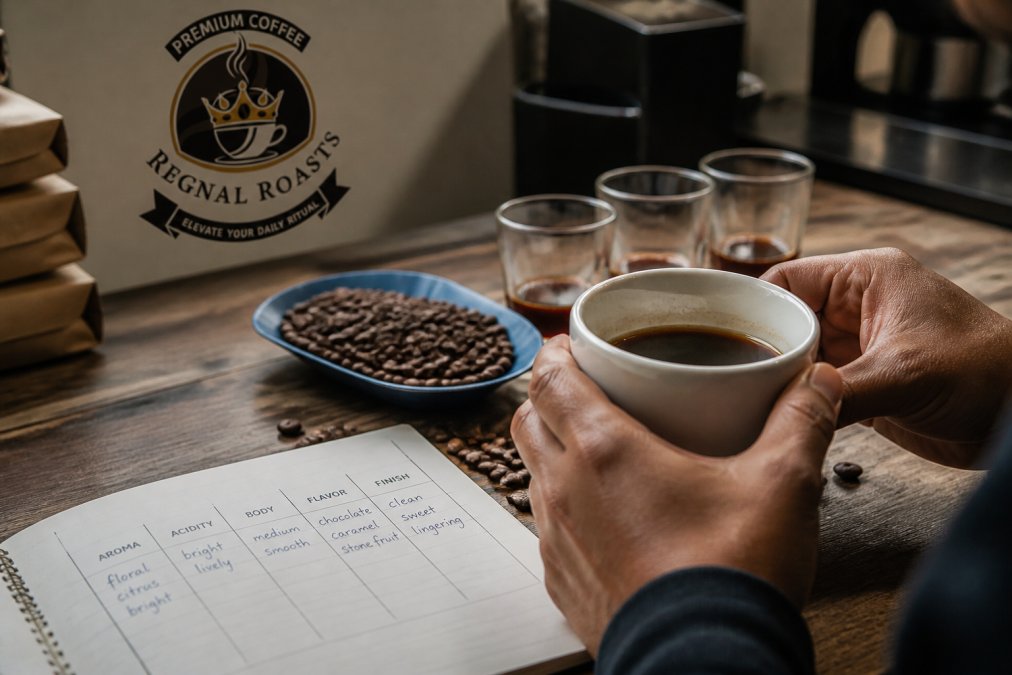
The flavor compounds in coffee come from the bean's origin and the roasting process. High-altitude beans grown in volcanic soil develop different chemistry than beans from lower elevations. A light roast preserves more of the bean's origin characteristics, while a dark roast brings forward roasted, caramelized flavors that mask subtle origin notes.
Learning to read tasting notes takes practice, but it's worth the effort. Instead of buying coffee blindly, you can predict whether a coffee will suit your preferences. If you know you enjoy chocolate and caramel notes, you'll recognize those descriptors on a label and feel confident ordering. If bright citrus notes typically feel too sharp for your morning routine, you'll avoid coffees labeled with those characteristics.
The Regnal Roasts Single Origin Favorites Sample Pack includes detailed tasting profiles for each coffee. The Peru single origin, for example, is described with "salted caramel, silky sweetness, and citrus." The Brazil Santos offers "elegant and smooth with rich cocoa notes." These aren't random adjectives, they're specific flavor markers you should expect to detect when you brew and taste each one.
Acidity in coffee terminology doesn't mean sour or unpleasant. It refers to the brightness and liveliness of the cup. High-acidity coffees taste crisp and vibrant. Low-acidity coffees taste smooth and heavy. Both are desirable depending on your preference and the time of day.
Best Way to Grind Coffee Beans for Freshness
The best way to grind coffee beans for freshness is to grind immediately before brewing. Whole beans stay fresh for weeks after roasting. Ground coffee begins losing flavor compounds within 15 minutes of grinding because the increased surface area allows oxidation to accelerate.
Grind size matters as much as timing. Different brewing methods require different grind sizes. French press needs a coarse grind with larger particles. Espresso requires a fine, powdery grind. Pour-over coffee works best with a medium-fine grind. Using the wrong grind size for your brewing method undermines the coffee's potential, even if the beans are fresh.
A burr grinder, either blade or conical, gives you control over grind consistency. Blade grinders produce uneven particle sizes, which causes uneven extraction and muddy flavor. Burr grinders crush beans to uniform size, ensuring consistent extraction and cleaner taste.
Store your whole beans in an airtight container away from light, heat, and moisture. A sealed container in a cool, dark cupboard preserves freshness far better than bags left open on a countertop. Avoid the freezer unless you're storing beans for several months; repeated temperature changes create condensation that damages flavor.
| Brewing Method | Grind Size | Timing | Grind Amount |
|---|---|---|---|
| French Press | Coarse | Just before brewing | 1:15 coffee-to-water ratio |
| Pour-Over | Medium-Fine | Just before brewing | 1:16 coffee-to-water ratio |
| Espresso | Fine/Powdery | Just before extraction | Measured for your machine |
| Cold Brew | Coarse | 12-24 hours ahead | 1:4 coffee-to-water ratio |
How to Store Coffee Beans to Maintain Flavor
How to store coffee beans to maintain flavor depends on understanding what degrades coffee: oxygen, light, heat, and moisture. Each of these accelerates the loss of aromatic compounds that make fresh coffee taste complex and alive.
An airtight container is your first line of defense. Glass jars with rubber seals, vacuum-sealed bags, or dedicated coffee canisters all work. The goal is to minimize oxygen exposure. Avoid clear containers that let light reach the beans. Opaque containers, ceramic, stainless steel, or dark glass, protect against light degradation.
Temperature stability matters. A cool, dark cupboard is ideal. Never store coffee above the stove, near a sunny window, or in the refrigerator where temperature fluctuations and moisture create problems. Room temperature, consistently maintained, is your target.
Humidity is often overlooked but critical.
Brewing Methods and Freshness Guarantees
The ideal brewing temperature is 195-205°F. Water that's too hot extracts bitter compounds. Water that's too cool under-extracts, producing weak, sour coffee. Most electric kettles let you set specific temperatures, giving you precision that elevates the entire tasting experience.
Frequently Asked Questions
What is the benefit of ordering a small batch coffee sampler?
A small batch coffee sampler lets you discover multiple roast styles and single origins before committing to full-size bags. Each 2oz sample makes it affordable to explore bold blends and medium roasts. Samplers also work well as gifts and help you identify your preferred flavor profile and brewing method without waste.
How do I choose between single-origin and blended coffee samplers?
Single-origin coffees highlight terroir, altitude, and processing methods, showing distinct tasting notes like citrus or floral notes. Blended coffees combine beans from multiple regions for balanced, complex flavor profiles. If you enjoy exploring how geography shapes taste, choose single origin. If you prefer consistency and smooth, rounded cups, blends work better. Many coffee enthusiasts try both to compare.
How long does small batch coffee stay fresh after roasting?
Small-batch roasted coffee peaks in flavor 3-7 days after roasting and stays optimal for 2-4 weeks in proper storage. Store beans in an airtight container away from light, heat, and moisture to maintain freshness and preserve the complex flavor notes the roaster intended.
Are coffee sampler packs worth the price?
At $23.23 for six 2oz samples, you're paying roughly $3.87 per variety, less than a specialty coffee shop drink. This cost is justified if you're testing whether you prefer single origins over blends, exploring different roast levels, or discovering new flavor profiles before buying larger quantities. For remote workers and home-based coffee enthusiasts who value ritual and quality, samplers offer excellent value and minimize buyer's remorse.