

Healthy Alternatives to Sugary Coffee Creamers
Table of Contents
- Why Sugary Creamers Don't Serve Your Morning Ritual
- Plant-Based Milk Alternatives That Transform Your Cup
- How to Flavor Coffee Naturally Without Added Sugar
- Sugar-Free Coffee Creamer Recipes You Can Make at Home
- Best Keto Coffee Creamer Brands and Low-Carb Options
- What Makes a Creamer Truly Healthy
- Texture, Mouthfeel, and How Coffee Pairs with Alternatives
- Frequently Asked Questions
Last Updated: October 2, 2026
Why Sugary Creamers Don't Serve Your Morning Ritual
Most coffee drinkers reach for conventional creamers without thinking twice. A single tablespoon of sugary creamer adds 5 grams of added sugar to your morning cup, compounding into hundreds of extra grams per month, a creeping calorie load that doesn't feel significant until you step back and look at the total.
Many commercial creamers rely on thickening agents like carrageenan and gums for shelf stability, not for what happens in your body. Finding healthy alternatives to sugary coffee creamers means choosing options where the ingredient list reads like actual food instead of a chemistry experiment.
The shift from sugary creamers to cleaner alternatives isn't about deprivation, it's about discovering that your coffee tastes better when it isn't masked by processed sweetness. Plant-based options, homemade recipes, and naturally flavored coffee blends deliver richness and depth without the glycemic spike.
Plant-Based Milk Alternatives That Transform Your Cup
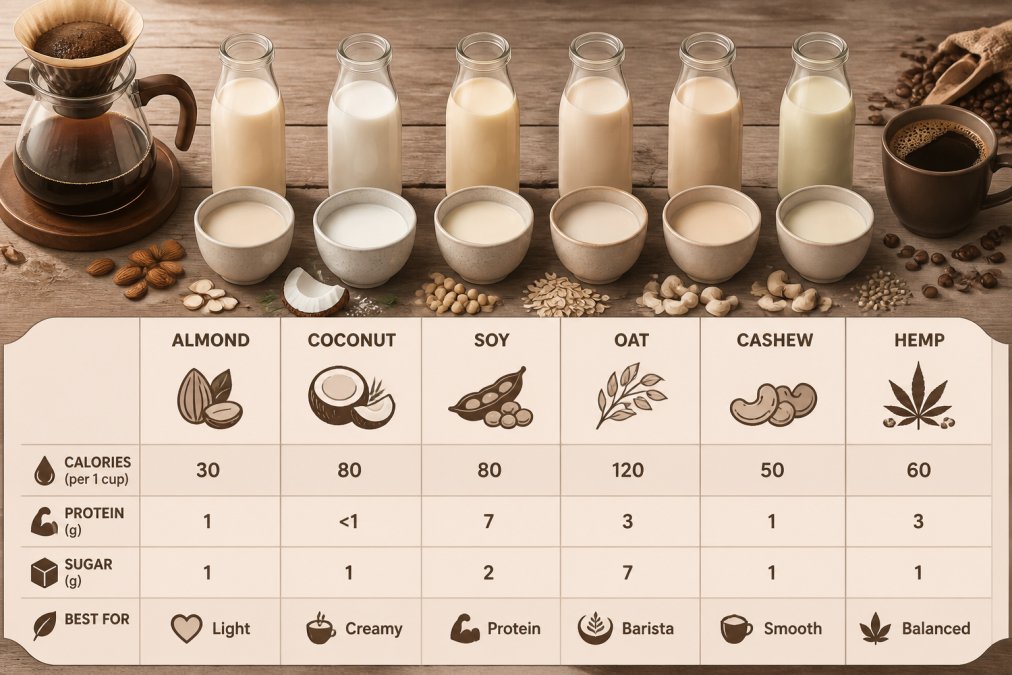
Modern plant-based milks, coconut, almond, cashew, and oat, deliver the body and richness of dairy creamers without added sugar or artificial thickeners in quality brands.
Coconut Milk and Cashew Cream
Full-fat coconut milk emulsifies beautifully with hot coffee, creating an indulgent mouthfeel.
Both are carb-friendly for keto diets: a quarter cup of full-fat coconut milk adds roughly 2 grams of net carbs, while cashew cream sits lower. Neither requires added sweeteners; the natural nuttiness and subtle sweetness complement coffee's bitterness.
Coconut milk's distinct flavor can overpower delicate, single-origin coffees. Cashew cream is more versatile but requires advance preparation if made fresh.
Almond and Oat Milk Options
Almond milk is widely available, neutral with any coffee profile, and adds roughly 30 calories per cup with virtually no sugar in unsweetened versions.
Unsweetened almond milk delivers about 1 gram of protein per cup, while oat milk offers 2-3 grams, contributing to a balanced macronutrient approach when combined with other sources.
Most commercial versions contain gums and stabilizers. For a cleaner option, homemade almond or oat milk takes about 10 minutes and requires only nuts, water, and a blender.
How to Flavor Coffee Naturally Without Added Sugar
Moving away from sugary creamers means losing the sweetness that masked mediocre coffee, but that's the opportunity. Naturally flavored coffee blends deliver complexity and depth from the start without relying on creamer.
Natural Extracts and Spices
Vanilla extract, cinnamon, and cocoa powder transform black coffee without added sugar.
Add spices directly to ground coffee before brewing to extract fully and distribute evenly. A pinch of sea salt amplifies natural sweetness and reduces bitterness.
Unsweetened cocoa powder adds richness and subtle chocolate without processed syrup taste. Mix a half teaspoon into grounds or stir after brewing to add dimension to your coffee's natural profile.
Naturally Flavored Coffee Blends
The cleanest approach is starting with coffee already flavored with natural oils. Regnal Roasts offers blends like French Vanilla and Hazelnut with natural flavoring oils applied while beans are warm, locking flavor deep into the bean without additional additives.


When coffee is flavored this way, you don't need creamer at all. A cup of Cinnabun coffee captures the warmth and indulgence of a cinnamon roll without added sugar or calories.

These blends are consistent, no guessing at measurements. The roaster has already calibrated flavor intensity to complement the bean's natural characteristics.
Sugar-Free Coffee Creamer Recipes You Can Make at Home
Homemade creamers give you complete control over ingredients, no carrageenan, gums, or mystery additives. Most recipes take five minutes and cost significantly less than premade versions.
Coconut Cream Base Recipe
Combine one can of full-fat coconut milk with one cup of heavy cream (or all coconut milk for dairy-free).
The texture is thick and luxurious, requiring less per cup than commercial creamers. This base works with any coffee profile and requires no additional sweetener.
Variations: swap vanilla for almond extract, add cinnamon, or include unsweetened cocoa powder, each takes five minutes.
Protein-Enriched Homemade Creamer
If you're looking to add macronutrient density to your morning ritual, blend one cup of full-fat coconut milk with two tablespoons of collagen peptides or unflavored protein powder.
This approach turns your coffee into a more complete breakfast component. The added protein slows caffeine absorption, preventing the energy spike and crash that comes from coffee alone.
The trade-off: protein powder can sometimes leave a slight aftertaste if you use too much.
Best Keto Coffee Creamer Brands and Low-Carb Options
For those following keto or low-carb protocols, most commercial creamers are disqualifying, they're loaded with carbs and sugar.
Full-fat coconut milk remains the gold standard for keto. A quarter cup contains roughly 2 grams of net carbs and delivers the fat content that keeps you satiated.
For those who want a premade option, MCT oil (medium-chain triglyceride oil) added to black coffee creates a keto-friendly "bulletproof" style drink.
Regnal Roasts' naturally flavored blends work exceptionally well in keto contexts. Because the flavor comes from the coffee itself rather than added sweeteners, you get the taste experience you're after without any carb impact. Hazelnut or Mocha with just black coffee or a splash of heavy cream gives you indulgence without the carb load.
| Creamer Option | Net Carbs per Serving | Best For | Preparation |
|---|---|---|---|
| Full-fat coconut milk | 2g | Keto, dairy-free | Pour and use |
| Heavy cream | 0.4g | Keto, traditional texture | Pour and use |
| Homemade coconut cream | 1-2g | Budget-conscious, customizable | 5-minute recipe |
| MCT oil | 0g | Maximum fat content | Blend into coffee |
| Naturally flavored coffee | 0g | Flavor without creamer | Brew and drink |
What Makes a Creamer Truly Healthy
Healthy alternatives to sugary coffee creamers share specific characteristics that separate them from conventional options. Understanding these markers helps you evaluate any new product or recipe you encounter.
Reading Labels for Clean Ingredients
Start with the ingredient list. If you can't pronounce or recognize most of what's listed, it's a processing signal.
Watch for these red flags: carrageenan, cellulose gum, sodium caseinate, and propylene glycol. These thickening agents and stabilizers aren't dangerous in small amounts, but they're unnecessary in a truly healthy creamer.
Natural flavoring is legitimate. It's more regulated than you might think and doesn't mean synthetic chemicals.
Sugar content matters more than total carbs.
Nutritional Profile Comparison
The best creamers deliver fat and minimal carbs. Fat creates satiety and mouthfeel, it's why heavy cream and coconut milk work so well.
Protein is a bonus but not essential. If your creamer adds protein, that's fine, but don't choose a creamer specifically for its protein content.
Calories per serving matter only in context.
Compare this to conventional sugary creamers, which often deliver 30-50 calories per tablespoon with minimal nutritional value beyond the carbs and sugar.
Texture, Mouthfeel, and How Coffee Pairs with Alternatives
The reason people stick with conventional creamers isn't flavor, it's texture. That smooth, velvety mouthfeel signals richness and satisfaction.
Mouthfeel comes from fat content and emulsification.
The coffee itself influences how creamers work. Darker roasts have lower acidity and pair better with richer, fattier creamers like full-fat coconut milk. Medium roasts like Regnal Roasts' French Vanilla and Caramel blends work beautifully with lighter plant-based options because the coffee's natural sweetness complements the creamer without overwhelming it.
Single-origin, lightly roasted coffees demand restraint with creamers.
The practical reality: experiment. Your ideal pairing depends on your coffee preference and palate.
Finding healthy alternatives to sugary coffee creamers transforms your morning ritual from a daily indulgence into a mindful practice.
Regnal Roasts' naturally flavored coffee blends, from Cinnabun to Hazelnut to Mocha, eliminate the need for creamer altogether. These specialty-grade single-origin beans are coated with natural flavoring oils while still warm, so every cup delivers depth and distinction without added sugar or artificial ingredients. Discover how handcrafted coffee blends elevate your daily ritual and make creamer unnecessary.
Frequently Asked Questions
What is the healthiest coffee creamer without sugar?
The healthiest options are unsweetened plant-based milks like almond, oat, or coconut milk, which contain zero added sugar and minimal calories. Homemade creamers made from coconut cream or cashew milk offer superior control over ingredients and avoid artificial additives and gums. For those seeking creamy texture without dairy, full-fat coconut milk provides healthy fats and natural richness. Pairing these alternatives with naturally flavored coffees, like those infused with vanilla, hazelnut, or cinnamon, eliminates the need for added sweeteners entirely.
How can I make my own sugar-free coffee creamer recipes at home?
A simple coconut cream base starts with full-fat coconut milk blended with vanilla extract and a pinch of sea salt. For protein-enriched versions, blend cashew cream with unflavored collagen powder or plant-based protein. Store homemade creamers in glass jars for up to two weeks. The key is using whole food ingredients and natural flavorings to avoid the processed additives found in commercial products.
How do I flavor coffee naturally without adding sugar?
Use natural extracts like vanilla, almond, or peppermint extract, just a few drops transform your cup. Whole spices such as cinnamon sticks, cardamom pods, or nutmeg can steep directly in your coffee. Specialty coffee blends with natural flavoring oils offer another route: they're infused while the beans are still warm, so the flavor bonds deeply without any added sugar or artificial ingredients. Combining naturally flavored coffee with plant-based milk alternatives creates a creamy, indulgent cup without processed sweeteners or gums.
Are plant-based creamers healthier than dairy creamers?
Plant-based creamers avoid lactose and cholesterol, making them suitable for those with dairy sensitivity. However, 'healthier' depends on your goals. Unsweetened plant-based options contain fewer calories and carbs than sweetened dairy creamers. Look for versions without carrageenan or other thickening agents. Whole-food plant-based choices, like homemade coconut or cashew cream, offer healthy fats and clean labels. The real differentiator is avoiding added sugar, artificial sweeteners, and processed additives in either category.
What are the best keto coffee creamer brands for low-carb diets?
Unsweetened coconut milk and heavy cream are keto staples with virtually zero carbs. Full-fat plant-based options work well for those avoiding dairy. When selecting brands, check that sweeteners don't spike blood sugar. Homemade creamers give you complete control: make coconut cream with vanilla extract. Avoid products listing sugar, high-fructose corn syrup, or sugar alcohols like maltitol, which can disrupt ketosis despite 'net carb' labeling.