

How to Store Coffee Pods Properly
Table of Contents
- Why Proper Storage Matters for Coffee Pods
- The Best Way to Store Coffee Pods
- Coffee Pod Storage Ideas for Your Kitchen
- How Long Do Coffee Pods Last
- Should Coffee Pods Be Refrigerated
- Protect Your Pods from Heat, Light, and Moisture
- Storage Tips for Small Kitchens and Bulk Purchases
- Your Coffee Pod Storage Routine
- Frequently Asked Questions
Last Updated: October 17, 2026
Why Proper Storage Matters for Coffee Pods
How you store coffee pods directly impacts the flavor, aroma, and freshness of every cup. At Regnal Roasts, we understand that premium coffee deserves premium care, and storage is where that care begins.

The moment a coffee pod is roasted, oxidation starts. Oxygen breaks down the oils and compounds that give your coffee its depth, heat accelerates the process, light degrades delicate flavor notes, and humidity can compromise the seal.
Whether you're stocking a monthly supply or keeping a few pods on hand, the storage method you choose determines how long your coffee stays at peak freshness.
The Best Way to Store Coffee Pods
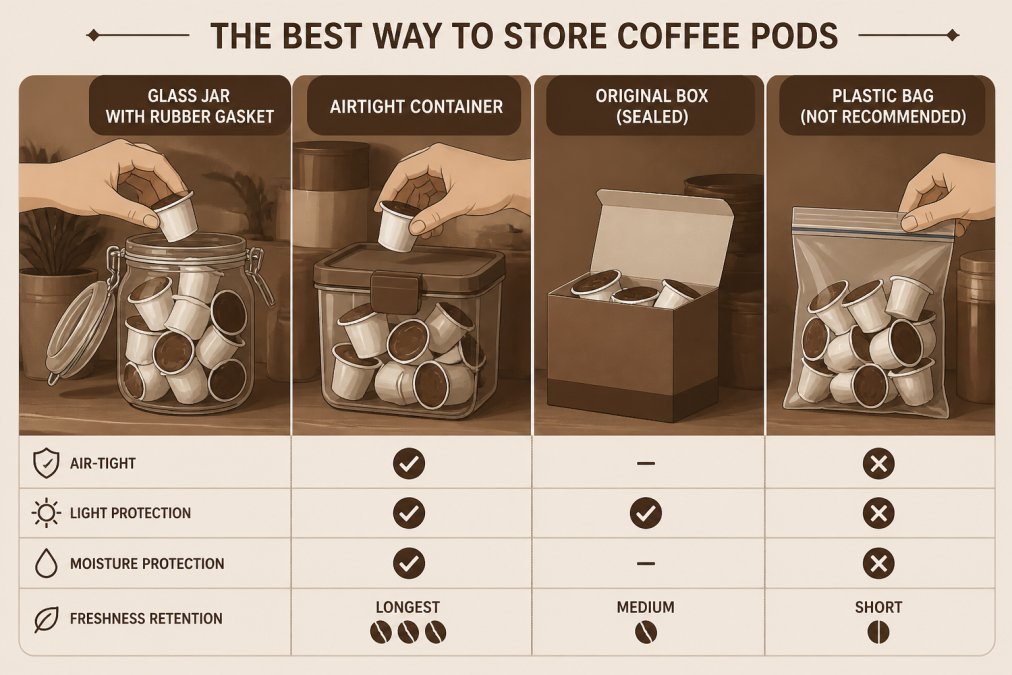
The best way to store coffee pods is to keep them sealed, cool, and protected from light and moisture. Your original packaging is engineered for this job, but alternatives work too, as long as they meet these core requirements.
Keep Pods in Their Original Packaging
Your coffee pods arrive in packaging designed to preserve freshness. Most premium pods, including Regnal Roasts's nitrogen-sealed capsules, use a multi-layer design that blocks oxygen and light, making the original packaging convenient, space-efficient, and often the best choice for short-term storage.
Keep the box sealed until you're ready to brew and store it in a cool cupboard away from sunlight and heat.
The one limitation: once you open the box to grab a pod, the remaining capsules are exposed to air. If you use pods regularly, this is fine.
Transfer to Airtight Containers
Airtight containers are your best bet for long-term storage or once the original packaging is opened, since a sealed container blocks oxygen and moisture.
Use a clean, dry container that hasn't held strong-smelling foods or spices, since coffee absorbs those aromas. Fill it as full as practical to minimize oxygen exposure, and label it with the roast type and transfer date so you know which pods to use first.
Food-grade plastic airtight containers with tight-sealing lids are acceptable, but plastic can absorb coffee oils and odors over time. Glass is the superior choice for serious coffee enthusiasts.
Use Glass Jars with Rubber Gaskets
Choose jars sized to your needs: a quart-sized jar works for a week or two of pods, a gallon-sized jar suits bulk storage. The key is minimizing headspace, since more air inside the container means more oxygen and faster oxidation.
Store glass jars in a cupboard or pantry away from jostling and temperature swings; since glass conducts temperature changes, avoid placing jars near windows or heat sources.
Coffee Pod Storage Ideas for Your Kitchen
Where you store coffee pods matters as much as how. The right location keeps pods fresh longer and keeps them accessible for your morning routine.
Cupboard and Cabinet Organization
A kitchen cupboard or cabinet is an ideal storage spot for coffee pods: typically cool, dark, and protected from direct sunlight.
Use a pod organizer or small shelf to keep pods upright and visible, so you can grab one without knocking over containers. If you use multiple blends, group them by roast type or flavor profile.
For small kitchens, a deep drawer works too, as long as it stays cool and dry. Avoid drawers near the stove or dishwasher, where heat and humidity fluctuate.
Pantry and Cool Place Storage
A pantry is often the best location for bulk coffee pod storage: it tends to be cooler, more temperature-stable, and darker than other kitchen areas, protecting pods from light exposure.
Store pods at eye level or slightly below for easy access, and avoid the top shelf if your pantry gets warm since heat rises. For a large supply, use a tiered shelf organizer to maximize space and organize pods by type or purchase date.
A basement or cool closet works well for long-term bulk storage, especially for quantities like the 60-pack from Regnal Roasts: these spaces stay cooler and darker year-round.
Coffee Pod Holders and Organizers
A dedicated coffee pod holder or organizer keeps pods accessible and your kitchen looking intentional. Options include wall-mounted racks, countertop stands, drawer inserts, and shelf organizers; choose one that fits your kitchen's aesthetic and storage space.
Countertop organizers are convenient for everyday use but expose pods to more light and temperature fluctuations than cupboard storage. Keep them away from windows and heat sources, and refill frequently so pods don't sit out too long.
Drawer inserts and shelf organizers maximize vertical space in cupboards and pantries. They keep pods visible and organized without taking up counter real estate.
How Long Do Coffee Pods Last
Coffee pod freshness depends on storage conditions, the pod's original roast date, and whether the packaging remains sealed.
Understanding Best-Before Dates
Coffee pods typically carry a best-before date printed on the packaging, indicating when the manufacturer guarantees peak flavor, usually 6 to 12 months from the roast date depending on the roaster and storage conditions.
The best-before date assumes proper storage: cool, dry, dark conditions. Pods stored in a cupboard or airtight container stay fresher longer than pods left on a warm countertop or in direct sunlight.
Pods past their best-before date aren't unsafe to drink, but the flavor and aroma will be noticeably diminished, and the coffee won't taste as bold or complex.
Freshness After Opening
Once you open a pod's packaging or the box containing multiple pods, freshness begins to decline. An individual pod in an opened box stays reasonably fresh for 2-4 weeks in a cool, dark place; after that, oxidation becomes noticeable.
Transferring pods to an airtight container immediately after opening extends freshness by several weeks, since the sealed container slows oxidation significantly.
For the best flavor, use pods within a few weeks of opening their packaging. Daily brewers needn't worry, but occasional brewers should transfer unopened boxes to airtight storage or buy smaller quantities more frequently.
Should Coffee Pods Be Refrigerated
Refrigeration can extend coffee pod freshness, but it's not necessary for most home storage situations. Understanding when and how to refrigerate pods helps you make the right choice for your situation.
Room Temperature vs. Refrigeration
Room temperature storage in a cool cupboard or airtight container is the standard recommendation and works well for most people. Room temperature is stable, convenient, and doesn't introduce moisture risk like refrigeration can.
Refrigeration slows oxidation and extends freshness, but it introduces a new concern: condensation. When a cold container of pods is removed from the refrigerator and exposed to warm kitchen air, moisture condenses on the pods.
Refrigeration makes sense only if your kitchen stays very warm year-round or if you're storing pods long-term and can keep them in an airtight container that prevents condensation. In most cases, a cool cupboard or pantry is sufficient.
Freezing Coffee Pods for Long-Term Storage
Freezing is an option for long-term storage of coffee pods you won't use for several months. Freezing halts oxidation and can preserve freshness for 6 months or longer.
To freeze pods safely, place them in an airtight container or freezer bag. Remove as much air as possible. Label the container with the roast date and type.
When you're ready to brew, remove pods from the freezer and let them come to room temperature before opening the container. This prevents condensation from forming on the pods.
Freezing works best for bulk purchases or specialty pods you want to preserve. For everyday coffee storage, a cool cupboard is more practical.
Protect Your Pods from Heat, Light, and Moisture
Three environmental factors degrade coffee pods fastest: heat, light, and moisture. Understanding how each affects your pods helps you choose the best storage location.
Avoiding Direct Sunlight and Heat
Direct sunlight degrades coffee quickly. UV light breaks down the compounds that create flavor and aroma. Heat accelerates oxidation. Together, they're devastating to coffee freshness.
Store pods away from windows, skylights, and glass doors. Avoid storing pods on countertops in bright kitchens or near appliances that generate heat, stoves, ovens, dishwashers, and coffee makers all radiate warmth.
The ideal storage temperature is between 50-70°F. Cooler is better. A cupboard away from heat sources, a pantry, or a basement typically provides this range. Avoid attics in summer and unheated garages in winter, where temperatures swing dramatically.
Managing Humidity and Air Exposure
Humidity is coffee's silent enemy. Moisture degrades the coffee inside the pod and can compromise the seal. High-humidity kitchens, especially those near dishwashers or in coastal areas, pose a risk.
Store pods in airtight containers to protect them from humidity. Avoid storing pods in damp basements unless they're sealed in an airtight container. If you notice condensation on your storage container, move it to a drier location.
Air exposure accelerates oxidation. Once a pod's seal is broken or a box is opened, oxidation begins. Minimize air exposure by keeping containers sealed between uses and transferring pods to airtight storage if the original packaging isn't resealable.
Storage Tips for Small Kitchens and Bulk Purchases
Small kitchens and large coffee purchases require creative storage solutions. Here's how to maximize freshness in tight spaces.
For small kitchens, prioritize vertical storage. Use shelf organizers, wall-mounted racks, or stackable airtight containers to maximize cupboard and pantry space.
For bulk purchases like the 60-pack from Regnal Roasts, divide pods into smaller airtight containers. Keep one container accessible in the kitchen and store the rest in a cool, dark location like a basement or pantry.
Label everything with the roast type and date. Use older pods first, a simple FIFO (first in, first out) system prevents pods from sitting too long.
Your Coffee Pod Storage Routine
Develop a simple storage routine to keep your pods fresh and your morning ritual smooth.
Buy pods in quantities you'll use within 4-6 weeks, or transfer bulk purchases to airtight containers immediately upon arrival. Check the best-before date and store pods in a cool, dark cupboard or airtight container.
Each week, check your supply. Refill your everyday container from your bulk storage if needed. Use older pods first. Before brewing, ensure the pod is intact and the seal is secure.
Store coffee pods the way you'd store any premium ingredient: with intention and care.
At Regnal Roasts, we craft each pod with nitrogen-sealed freshness to lock in peak flavor from roast to brew. Our handcrafted blends, from the Original Roast to single-origin options like our Mexican and Peruvian K-Cup compatible pods, deserve storage that honors the care we put into roasting them.

Frequently Asked Questions
How long do coffee pods stay fresh after opening?
Once you open a box of coffee pods, the remaining pods should stay fresh for 2-3 weeks if stored properly in an airtight container. Nitrogen-sealed pods like Regnal Roasts' Original Roast maintain their peak flavor longer because each capsule is oxygen-free. After opening, minimize air exposure by keeping pods in sealed containers away from heat, light, and humidity. Check the best-before date on your packaging for the manufacturer's freshness guarantee.
Should coffee pods be refrigerated?
Room temperature storage is best for coffee pods. Refrigeration can expose pods to moisture and temperature fluctuations that damage flavor. The exception: if you purchase in bulk, a cool cupboard or pantry is ideal. Freezing is an option for long-term storage, but thaw pods to room temperature before brewing to avoid condensation inside the capsule that weakens the coffee.
What's the best way to store coffee pods?
Keep coffee pods in cool, dark, dry conditions. If pods remain in their original sealed packaging, store them in a cupboard or pantry away from direct sunlight and heat sources. For opened boxes, transfer remaining pods to airtight containers with flip lids or glass jars with rubber gaskets to block air exposure and preserve aroma. Maintain storage temperatures between 50-70°F and away from humidity. Proper storage protects the flavor and freshness of premium blends like Regnal Roasts' handcrafted selections.
Do coffee pods need to be stored in an airtight container?
Yes, airtight containers are essential after opening a box of coffee pods. Sealed containers with rubber gaskets or flip lids prevent oxygen and moisture from degrading the coffee inside. If pods remain in their original sealed packaging unopened, airtight storage is less critical, but it still protects against environmental factors. Airtight storage is especially important for bulk purchases or monthly supplies, ensuring each pod delivers the bold, balanced flavor you expect between uses.